
Bloomberg shock: American LNG puts Greece in the eye of the storm – A pawn in the energy war against Russia
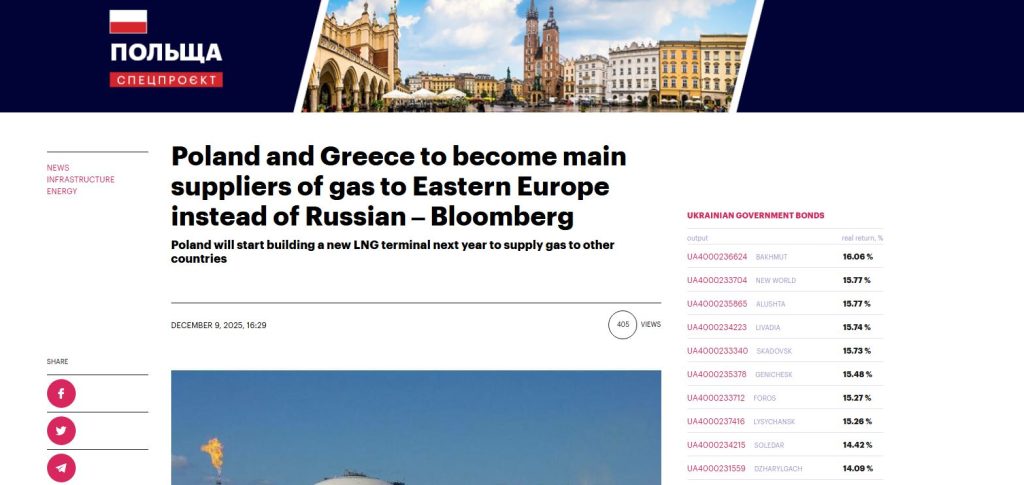
“Poland and Greece are leading the way in breaking free from Russian gas,” Bloomberg emphasizes.
Poland and Greece, which have access to the sea in the north and south of Europe, respectively, could become the main suppliers of Liquefied Natural Gas (LNG) to the countries located between them, amidst the West’s attempt to break free from Russian natural gas, writes Bloomberg.
The European Union has set a goal to completely halt natural gas purchases from Russia by November 2027. A significant increase in LNG supplies from North America, Qatar, and other regions, expected in 2026–2027, is anticipated to help smooth the transition. However, several landlocked countries in Eastern and Central Europe are in a more difficult position.
Poland and Greece are leading the way in breaking free from Russian gas
Poland and Greece are intensively developing natural gas reception and transportation infrastructure and will be able to supply countries within the continent, from Hungary to Ukraine, the American media outlet characteristically emphasizes.
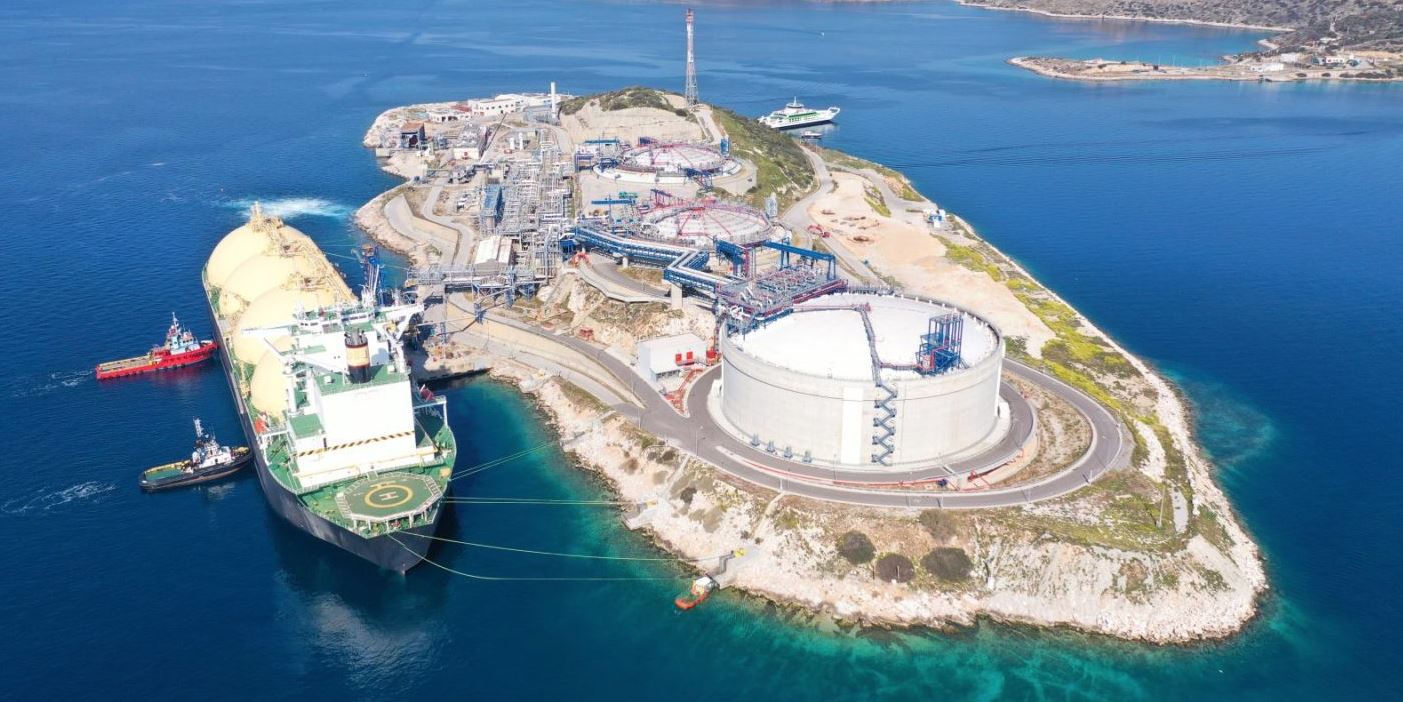
The Polish natural gas pipeline operator, Gaz-System, will decide on the construction of yet another floating terminal for LNG reception in the Baltic Sea in the first half of next year, CEO Slawomir Hincz told Bloomberg. “This is due to a noticeable increase in interest in LNG both in Poland and in other countries in our region,” he explained.
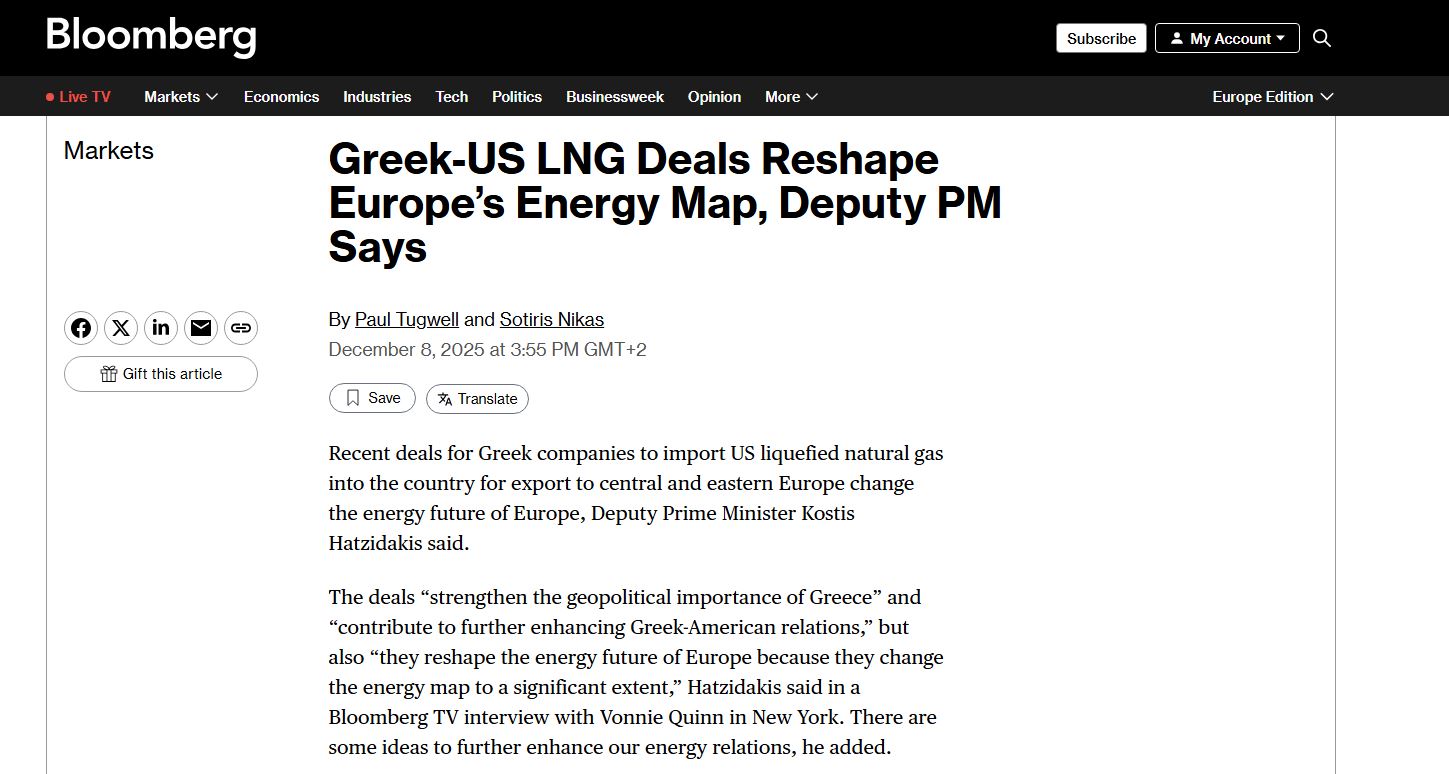
Hatzidakis: American LNG via Greece changes Europe’s energy map
The agreements concluded by Greek companies for the import of large volumes of LNG from the United States for the purpose of export to Central and Eastern Europe are changing the continent’s energy future, Greek Vice President Kostis Hatzidakis told the agency. These not only “strengthen Greece’s geopolitical importance” but also “significantly change the energy map” of Europe, he added.

For its part, Poland had announced as early as 2018 that it would not renew its contract with Gazprom and signed an agreement for the supply of LNG from the United States. The country benefited from this outbreak of war in Ukraine, when natural gas prices in Europe skyrocketed and Gazprom’s supplies stopped.
Poland is the biggest winner from the transition to American LNG
LNG imports to Poland, according to Bloomberg estimates based on ship traffic data, increased from 1.18 million tons in 2017 to 5.71 million tons in 2025—from 1.7 billion to 8 billion cubic meters, respectively. Poland is also building a floating terminal with a capacity of 6.1 billion cubic meters, which is expected to be ready in 2028. The capacity of the first two terminals has been fully contracted by the state oil and gas company Orlen. The new terminal will be used to supply not only Poland but also other countries, making the country a regional gas transit hub.
How Warsaw became a key supplier
“Poland indeed has some structural advantages, the most important being access to the sea. For decades, almost the entire region depended on Russian pipeline gas. Poland, conversely, continued to develop its own infrastructure and, having started earlier than others, is now in a much stronger position,” says Mykhailo Svyscho, an analyst at the Kyiv-based company ExPro Consulting.
Poland is already supplying American LNG to Ukraine, and Orlen stated that it is ready to increase transit from 600 million cubic meters in 2025 to over 1 billion cubic meters in 2026. Notably, Ukraine also imports LNG from Lithuania.
www.bankingnews.gr
Οι απόψεις που εκφράζονται στα σχόλια των άρθρων δεν απηχούν κατ’ ανάγκη τις απόψεις της ιστοσελίδας μας, το οποίο ως εκ τούτου δεν φέρει καμία ευθύνη. Για τα άρθρα που αναδημοσιεύονται εδώ με πηγή, ουδεμία ευθύνη εκ του νόμου φέρουμε καθώς απηχούν αποκλειστικά τις απόψεις των συντακτών τους και δεν δεσμεύουν καθ’ οιονδήποτε τρόπο την ιστοσελίδα.
Σχετικά άρθρα:
 Larry Johnson (CIA): O Ουκρανικός στρατός δεν μπορεί να αποκρούσει καμία επίθεση σε όλο το μέτωπο… είναι τρομερό
 ΟΠΑΠ: Προχωράει η συμφωνία με Allwyn – Παρήλθε άπρακτη η προθεσμία σύγκλησης ΓΣ
 Η Βρετανία και οι ΗΠΑ θέλουν να εγκαταλείψουν πλήρως τα ρωσικά πυρηνικά καύσιμα μέχρι το τέλος του 2028
 ΗΠΑ: Μαζικές διαδηλώσεις και αποχές σε σχολεία και πανεπιστήμια κατά της ICE μετά τους θανάσιμους πυροβολισμούς στη Μινεάπολη –