
Bombshell in Germany: Secret war preparation plan leaked – Generals exposed by 24-page instructions
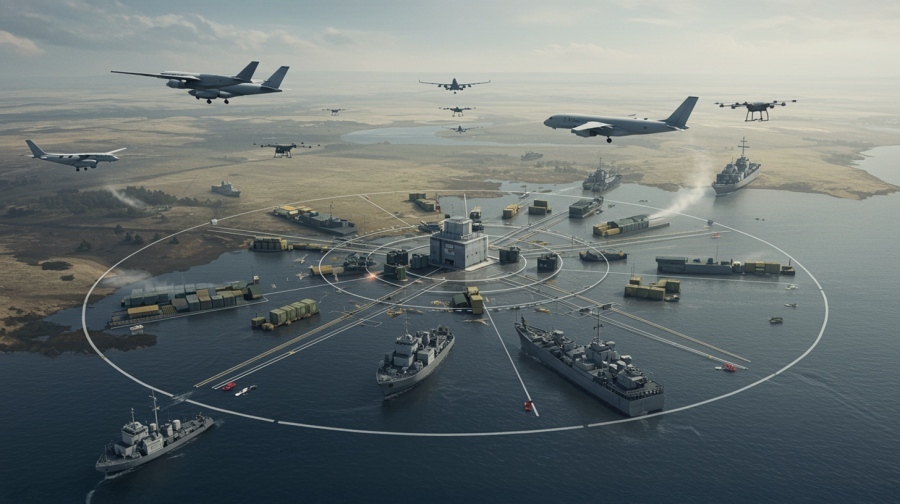
The humiliation of Germany seems to have no end, as a confidential government document regarding the country’s war preparations has been leaked. Not only has it surfaced, but Germany’s entire defense plan spans a mere 24 pages. Military planners in Germany believe that recent cyberattacks, sabotage, and disinformation campaigns may represent the first step toward a new war. According to sources from POLITICO, which has obtained the document, this assessment is reflected in the Strategic Operations Plan for Germany (OPLAN). This document outlines how Berlin would organize the defense of German territory in the event of a significant NATO conflict. The design reflects a broader shift in Germany—which has taken a central role in the strategic planning of NATO forces—as Russia has become increasingly aggressive toward European allies nearly four years after the full-scale invasion of Ukraine.
Hybrid measures
The document states that hybrid measures “can fundamentally serve to prepare for a military conflict.” Instead of treating cyber operations or influence campaigns as marginal pressure, the plan integrates them directly into the logic of military escalation. This assumption has immediate consequences for how Germany designs its role in a future conflict. The document positions Germany as an operational base and transit corridor for NATO forces, which would face pressure early on, especially given Germany’s role as the primary hub for the movement and maintenance of alliance troops.
The 24-page instructions
The 24-page document is classified as a “light” version of the plan, aimed at coordinating civilian and military bodies to define Germany’s role as a transit hub for allied forces. In a conflict scenario, Germany would become a “priority target for conventional attacks with long-range weapon systems” targeting both military and civilian infrastructure, according to the document. The OPLAN analyzes a five-phase escalation model ranging from early threat detection and deterrence to national defense, NATO collective defense, and post-conflict restoration. The document notes that Germany is already in the first phase, focused on creating a common threat image, government coordination, and preparing for protection and supply measures. The plan also assigns a significantly expanded role to domestic military forces. Home security units are responsible for protecting critical infrastructure, securing troop movements on German soil, and supporting state functions while combat forces are deployed elsewhere. Civilian infrastructure is viewed as vital for military success, with transport networks, energy supply, health services, and private contractors repeatedly cited as essential factors. The document states that “many tasks require support from the civilian sector,” without which the plan cannot be realized.
War alert from the Germans
Countries that have paid dearly for Germany’s warmongering tendencies shivered at the news. It appears German Chancellor Friedrich Merz may wish to revive yet another slaughter on the Old Continent. There is no other explanation for why he chose his New Year’s message to sound a war alert in Europe, targeting both Russia and the USA.
What peace?
Europe must defend its interests more dynamically to ensure peace and prosperity in 2026 amid challenges from Russian aggression, global protectionism, and shifts in relations with the USA, stated German Chancellor Friedrich Merz in his annual speech. Since taking office in May, Merz has led Europe’s efforts to support Ukraine against the Russian invasion. Berlin has also increased military spending since 2023 to show it is ready to assume more responsibilities. In his New Year’s speech, Merz did not mince words, stating that the “terrible” war raging at Europe’s doorstep is a direct threat to the continent’s freedom and security. “We see more and more clearly that Russia’s aggression was and is part of a plan targeting all of Europe,” Merz said, adding that Germany faces daily sabotage, espionage, and cyberattacks.
Fire directed at the USA as well
He also referred to the additional challenge of protectionism in the global economy, pointing out that Europe’s dependence on imported raw materials is increasingly used as a political tool against it. Germany, Europe’s largest economy, is trying to reduce its dependence on China while simultaneously facing international trade tensions and the consequences of U.S. President Donald Trump’s tariff policies. The largest European economy has also been hit by what many economists describe as a lack of domestic reforms and investments in recent years and is expected to grow only modestly this year after two years of contraction. Merz also mentioned the more difficult cooperation with the United States—which has historically been the reliable guarantor of German and European security—since Trump’s return to the White House in January 2025. “For us Europeans, this means we must defend and enforce our interests much more dynamically on our own,” Merz said.
A milestone year
However, he stressed that Europe must be guided by self-confidence rather than fear and take action. “This can be a decisive year for our country and for Europe. It can be a year in which Germany and Europe, with new strength, reconnect with decades of peace, freedom, and prosperity,” Merz concluded.
Putin is not “paranoid” at all regarding NATO’s intentions
A very significant event occurred this month related to the Russia-Ukraine war that went largely unnoticed by the media, yet carries immense symbolic value and confirms what many Western analysts consider merely a “paranoid” Russian concern. While the main narrative from Western media is that the war in Ukraine is not about NATO expansion to Russia’s doorstep, December brought another example where Ukrainian forces are increasingly integrated into NATO’s military infrastructure in a de facto manner. NATO leadership even boasts of this trend, while European and American analysts call this position a “myth.” Russia, according to them, has nothing to fear, as every country, whether on Russia’s border or not, must have the right to join NATO.
Military exercises and war scenarios
A recent NATO press release revealed Ukraine’s participation in critical military exercises held in early December, based on a hypothetical external offensive scenario against the alliance. The announcement stated that 1,500 soldiers and civilians from several European countries participated in the “Loyal Dolos 2025” exercise. Even more significant is that NATO command referred to the “lessons learned” from the war in Ukraine, while praising the role of Ukrainian officers and soldiers in the exercise. “Lessons learned from Russia’s war against Ukraine were integrated to prepare participants to fight and win in a rapidly evolving environment,” the NATO statement said. “This was also the first time Ukrainian experts participated directly in the execution of this NATO exercise.”
Ukraine and NATO’s Article 5
A post by the General Staff of the Armed Forces of Ukraine on Facebook states that Ukrainian officials participated in the Loyal Dolos exercise, highlighting their substantial involvement in the NATO drill simulating the alliance’s response to an attack. “Ukraine is becoming part of NATO’s collective defense architecture. Ukrainian JATEC experts participated for the first time in the process of NATO Treaty Article 5 mechanisms in the LOYAL DOLOS 2025 exercise,” the statement reads. Ukraine’s participation in military exercises simulating NATO’s response to attacks brings the country closer to integration into NATO military infrastructure, despite the fact that Trump administration officials had repeatedly clarified that Ukraine’s membership in NATO is not in the immediate plans.
Russia and reactions to NATO expansion
Moscow has complained repeatedly that the USA and NATO leadership say one thing and do another, especially regarding historical NATO expansions, such as the accession of the Baltic states in the 2000s. Even without being an official member of NATO, President Putin has repeatedly expressed his dissatisfaction with the “NATO-ization” of Ukraine—namely, the expansion of NATO military infrastructure into this country that was once a Soviet satellite. “De-NATO-ization” and “De-Nazification” are cited as consistent reasons for the “special military operation” in Ukraine.
Confirmations from NATO’s strategic plans
Significant milestones such as the integration of Ukraine into Article 5 readiness exercises confirm that Putin’s view is not “paranoid” at all. Russia is closely monitoring NATO’s actions and is not blind to the words and deeds of the alliance’s leadership. On the contrary, Moscow takes NATO’s moves into account and constantly evaluates its strategic maneuvers as Ukraine integrates further into NATO’s military infrastructure. These events reinforce the assessment that Russia’s concerns about NATO expansion and the prospect of Ukraine joining are not baseless. In fact, they are a consequence of NATO’s strategic moves, which should not be underestimated.
Putin and the response
The ongoing integration of Ukraine into NATO, even without being an official member, shows that Russia is not “paranoid” in its concerns about the threat posed by the Alliance’s expansion. On the contrary, what is happening confirms Moscow’s strategic perception of NATO’s continuing challenge in the region, with Ukraine serving as Russia’s “Achilles’ heel” in its quest to ensure national security.
www.bankingnews.gr
Οι απόψεις που εκφράζονται στα σχόλια των άρθρων δεν απηχούν κατ’ ανάγκη τις απόψεις της ιστοσελίδας μας, το οποίο ως εκ τούτου δεν φέρει καμία ευθύνη. Για τα άρθρα που αναδημοσιεύονται εδώ με πηγή, ουδεμία ευθύνη εκ του νόμου φέρουμε καθώς απηχούν αποκλειστικά τις απόψεις των συντακτών τους και δεν δεσμεύουν καθ’ οιονδήποτε τρόπο την ιστοσελίδα.
Σχετικά άρθρα:
 Ομολογία – σοκ Von der Leyen: «Επιβάλαμε τα εμβόλια Covid-19 Pfizer, χωρίς να ξέρουμε τι θα πάθουν οι πολίτες»!
 Μητσοτάκης για εσωκομματικές ΝΔ: Ικανοποίηση για τη συμμετοχή 122.000 πολιτών – Είμαστε η μεγάλη παράταξη της μεσαίας τάξης
 Οι ΗΠΑ δεν θέλουν να κάνουν συμβιβασμούς στο ειρηνευτικό σχέδιο για Ουκρανία
 Εύβοια: Χωρίς ρεύμα στον Δήμο Κύμης – Αλιβερίου λόγω έκρηξης σε υποσταθμό του ΔΕΔΔΗΕ στο παλιό εργοστάσιο της ΔΕΗ