
Global terror over Trump strategy – The US wants to
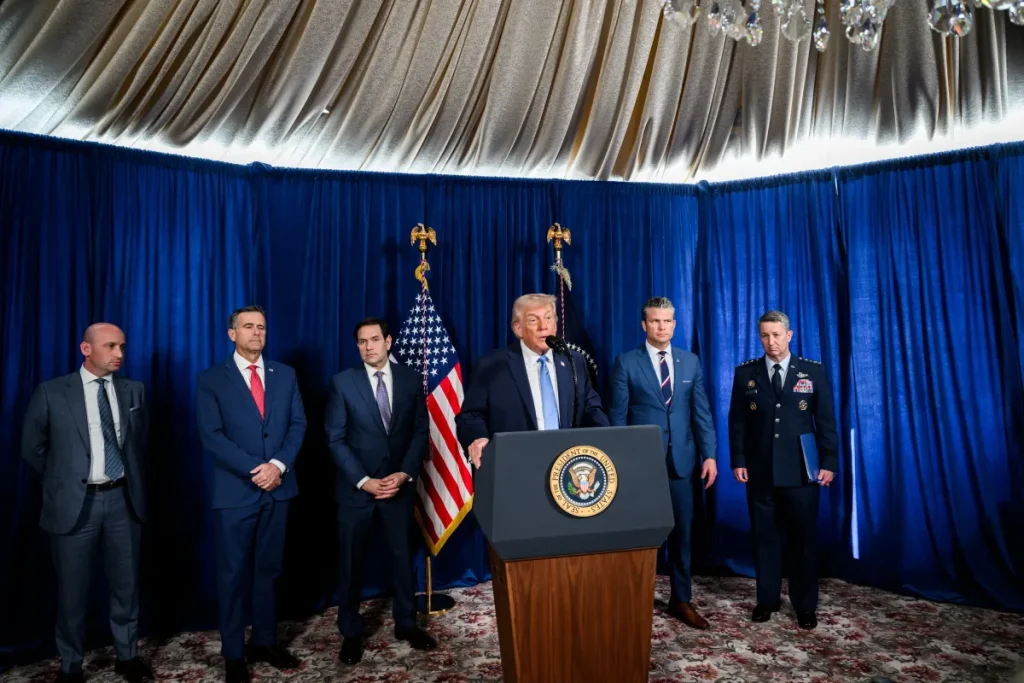
The Trump strategy carries risks of eroding international norms and trust among allies, a fact that could undermine US hegemony in the long run.
The year 2026 began with a series of strategic signals from the Trump administration. On January 3, the military intervention in Venezuela and the arrest of President Nicolas Maduro marked the first steps of a seemingly decisive campaign to restore American influence in Latin America. The move aims to clearly demarcate political interests and create new spheres of military and economic denial against China and Russia. This strategy focuses less on ideological dominance and more on a carefully calculated ability to disrupt and deny access in critical geopolitical sectors, demonstrating a more realistic and holistic approach to global competitiveness. The 2026 National Security Strategy explicitly mentions the term “denial” three times, emphasizing that the US will prevent competitors from outside the Western Hemisphere from placing forces or critical infrastructure in the region, while simultaneously developing military capacity to deter aggression in the First Island Chain and ensure the defense of Taiwan.
Spheres of denial
The concept of the sphere of denial is becoming a central point of the Trump administration’s foreign policy, reflecting Washington’s intention to limit the options of adversaries through strategic hurdles rather than prolonged military interventions. This approach reflects a realistic revision of American overextension, shaped by two decades of managing vague objectives in the Middle East. Meanwhile, China is strengthening its strategic influence in key regions—from Latin America and the BRICS nations to the Arctic and Africa. Simultaneously, China seeks dominance in rare earth supply chains and critical technological infrastructure, while Russia restores military installations in the Arctic and strengthens its maritime claims. In this context, the US pursuit of controlling resources like Venezuelan oil or even the annexation of Greenland signals a decisive realignment of Washington’s strategic position.
The US strategy hides risks
The strategy of denial works by overturning the status quo and creating obstacles that limit the options for China and Russia. Denying access to critical regions, technologies, and infrastructure does not necessarily require direct military conflict. Instead, Washington leverages vulnerabilities in technological systems, economic chains, space infrastructure, and even international law, creating a multi-layered mechanism to contain the power of rivals. However, the implementation of this strategy carries the risk of eroding trust in the international system, which is already fragmented by interconnected economies and the loss of a shared vision for international norms. Bypassing existing rules and agreements, sidelining or pressuring allies, and weakening multilateral cooperation may reduce the willingness for compliance and solidarity—the very foundations upon which the US relies to project its power. The denial strategy is accompanied by an implicit diplomatic message: every move that restricts adversaries is recorded as “prendre acte”—a discreet warning that subsequent actions will be evaluated and responded to accordingly.
Thucydidean realism and moral diplomacy
The Thucydidean rule that “the strong do what they can and the weak suffer what they must” finds new expression in the public statements of Stephen Miller, a senior advisor to the US administration. The reference to power as the “ironclad necessity” of the world reflects the harsh realism of American strategy, which views power and deterrence as central tools in global competitiveness. China, with its development of naval power, digital infrastructure, and critical technologies (semiconductors, artificial intelligence, satellite networks), presents a particularly high challenge to American interests. Conversely, Europe’s dependence on Russian energy and its technological interdependence limit its autonomy. The Arctic, and specifically Greenland, has turned into a field of strategic confrontation, with Washington claiming sovereignty for military, technological, and commercial reasons.
The grand strategy of “consolidation”
A. Wess Mitchell describes Trump’s foreign policy as a strategy of “consolidation.” This concept involves reducing commitments in secondary arenas, transferring responsibilities to allies, strengthening the Western Hemisphere, and the re-industrialization of the US.
The five pillars of this strategy are:
-
New Monroe Doctrine: Dominance in the Western Hemisphere.
-
Management of coexistence with China.
-
Transfer of responsibilities to Europe.
-
Reduction of commitments in the Middle East.
-
Economic revitalization at home.
Despite theoretical coherence, the implementation of this strategy faces three critical pressures: from the defense industry, Big Tech companies, and Israeli interests. The pressure for continuous military development, the pursuit of technological dominance, and Israeli demands for confrontation with Iran create persistent internal contradictions that make the disciplined application of the “consolidation” strategy difficult. The attempt to assign responsibility for Europe’s security to the Europeans, while Washington simultaneously exerts pressure regarding Greenland and the Arctic, may undermine NATO cohesion and push Europe toward a more cooperative relationship with Russia. Similarly, the effort to limit the US presence in the Middle East clashes with the demands of Israel and the American military-industrial complex.
Internal politics and strategic inconsistency
The multidimensional pressure exerted by various internal factors makes the execution of the consolidation strategy particularly difficult. Washington appears simultaneously overextended and paralyzed, with one hand attempting to limit commitments and the other opening new confrontations. This creates a mosaic of spontaneous interventions instead of a coherent, disciplined strategy, increasing the risk of strategic failure despite the initial rationality of “consolidation.” The US strategy under Trump proves that in a multipolar and competitive world, power, deterrence, and the denial of access to critical sectors are central tools of influence. However, internal contradictions, pressure from the defense industry, the pursuit of technological sovereignty, and pressures from allies like Israel limit the effectiveness of the consolidation strategy. The application of the denial strategy may offer significant strategic advantages, but it simultaneously carries risks of eroding international norms and trust among allies, a fact that could undermine US hegemony in the long run. American strategy today is therefore a double-edged sword capable of creating distinct advantages, but also of amplifying the uncertainties and contradictions of the superpower itself. The next decade will show whether Washington can truly consolidate its forces or if multidimensional pressure will turn theoretical “consolidation” into a new cycle of overextension and strategic inconsistency.
www.bankingnews.gr
Οι απόψεις που εκφράζονται στα σχόλια των άρθρων δεν απηχούν κατ’ ανάγκη τις απόψεις της ιστοσελίδας μας, το οποίο ως εκ τούτου δεν φέρει καμία ευθύνη. Για τα άρθρα που αναδημοσιεύονται εδώ με πηγή, ουδεμία ευθύνη εκ του νόμου φέρουμε καθώς απηχούν αποκλειστικά τις απόψεις των συντακτών τους και δεν δεσμεύουν καθ’ οιονδήποτε τρόπο την ιστοσελίδα.
Σχετικά άρθρα:
 Καναδάς: Νέα μείωση επιτοκίων κατά 0,25% από την κεντρικη τράπεζα, στο 2,5%
 Η ΕΛΑΣ συνέλαβε 35χρονο για φρικτή γυναικοκτονία στη Δανία
 Deal-βόμβα στον μιντιακό χάρτη: Ο Μάρκος Σεφερλής περνά επίσημα στην Alter Ego Media – Συμφωνία – μαμούθ έως το 2041
 Η Ουκρανία προχωρά στην έναρξη λειτουργίας του πυρηνικού σταθμού ηλεκτροπαραγωγής του Chernobyl