
Iran destroys world’s largest LNG plant in Qatar – Terrified Trump: ‘I had no idea’ as US seeks $200 billion
Matters are developing very poorly in the Persian Gulf. Attacks against targets on both sides have now touched the most sensitive and strategically significant sector: energy. Already, Brent crude has reached $112 per barrel, with projections hitting $130. The US initially struck critical Iranian energy infrastructure after seeing that 7,800 strikes on military and civilian targets failed to yield results. However, the situation is deteriorating rapidly as Iran sustains heavy damage but refuses to back down.
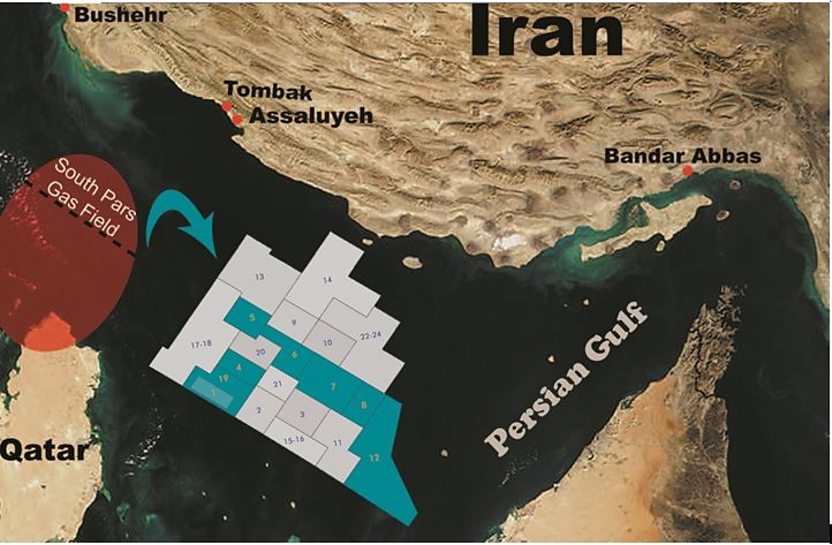
The US and Israel launched assaults on Iranian oil and gas facilities, including the Esalouyeh petrochemical complex and the world’s largest gas field, South Pars. However, the retaliation from the IRGC (Islamic Revolutionary Guard Corps) against the energy infrastructure of US allies in the Persian Gulf has been catastrophic.
It is noted that the IRGC has deployed 5,800 missiles and drones, delivering devastating blows to 2,200 targets across Persian Gulf states, specifically targeting Israel. Tel Aviv has suffered dramatic destruction. Crucially, the IRGC struck the world’s largest gas-to-liquids (LNG) plant, Pearl GTL in Qatar, which QatarEnergy reports has burned to the ground. Simultaneously, the IRGC hit US bases in Kuwait, the United Arab Emirates, and Bahrain, causing massive destruction and high casualties. To date, 245 American personnel are reported killed or wounded by Iranian attacks.
The situation is escalating dangerously. Seeing the deadlock, the Americans are urgently requesting $200 billion for new weaponry and plans for a ground landing. Such an operation would require over 300,000 US troops to have any chance of success. Notably, the Iranians possess a combined force of 880,000 regular army and IRGC troops, plus 300,000 reservists. A ratio of 1 American to 3 Iranians implies a long-term, grueling war. A proposed landing of 10,000 commandos on Kharg Island—the main hub for 90% of Iranian oil exports—would likely fail, as Iran could neutralize the entire force due to the island’s proximity to the mainland. US and Israeli airstrikes will not crush Iran; instead, the US is sinking deeper into a war where Iranian retaliation is proving shockingly successful.
Terrified Trump: ‘I did not know’ – Israel will not attack South Pars gas field again
The United States was unaware of Israel’s plans to attack the South Pars gas and oil field, US President Trump claimed. “The United States knew nothing about this specific attack, and Qatar had no involvement in it and had no idea it was happening,” he wrote on Truth Social.
The American President also promised that Israel would not attack the facilities again. However, he threatened that America might take such measures itself. “Israel will no longer strike this vital and valuable field, South Pars, unless Iran recklessly decides to attack a completely innocent place, in this case, Qatar, at which point the United States of America, with or without the help and consent of Israel, will massively destroy the entire South Pars field with a force and power that Iran has never seen or experienced before,” Trump wrote. The Ministry of Foreign Affairs of Qatar condemned the attack on the South Pars consortium.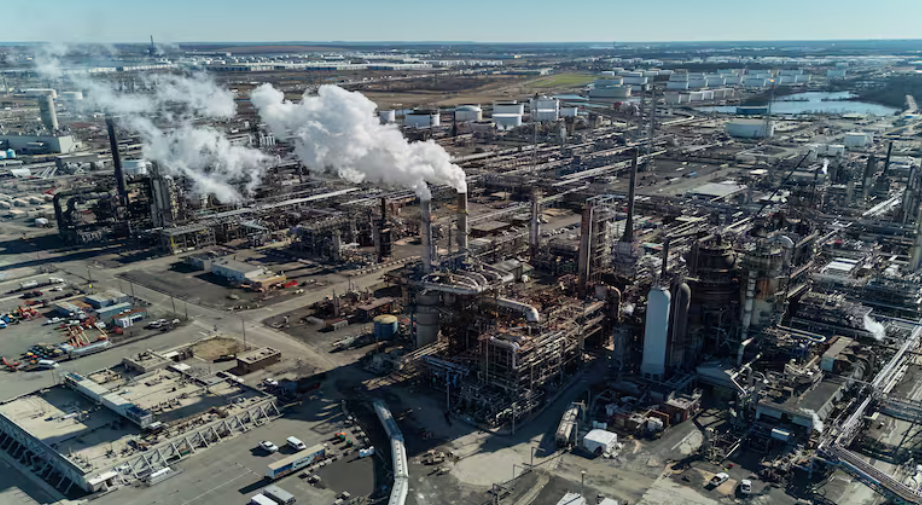
Chaos everywhere – IRGC destroys US bases in Kuwait, UAE, and Bahrain
The Revolutionary Guard Navy—previously claimed by the US to be destroyed—struck US bases in Kuwait, the United Arab Emirates, and Bahrain, according to Press TV and an official IRGC statement. “The Revolutionary Guard Navy successfully hit major targets at the Minhad and Al-Dhafra airbases (UAE), the Al-Adairi helicopter base (Kuwait) used by US forces, and the Mina Salman airbase (Bahrain), home to the US Fifth Fleet headquarters.”
Reports indicate that command centers, fuel tanks, and equipment hangars were hit at Minhad; fuel tanks and early warning radars at Al-Dhafra; early warning radars and the central aircraft parking area at Al-Adairi; and the US Fifth Fleet headquarters at Mina Salman. The joint US-Israeli operation against the Islamic Republic is now in its third week, with both sides exchanging blows. Israel stated its goal was to prevent Iran from obtaining nuclear weapons, while the US threatened to destroy the country’s military potential and called for regime change. Meanwhile, Iran is demonstrating incredible defensive and offensive capabilities, ruling out a return to negotiations.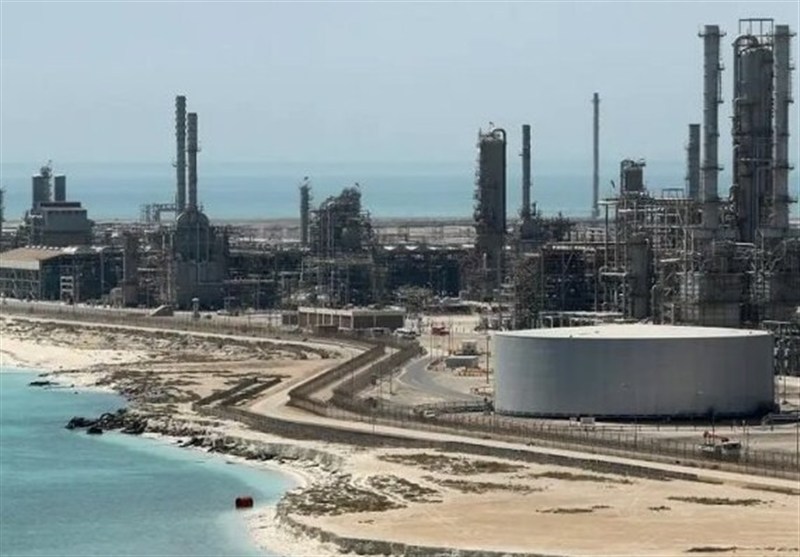
Pearl GTL in Qatar, the world’s largest LNG station, burned to the ground
The world’s largest liquefied natural gas (LNG) station, Pearl GTL in Qatar, has been completely destroyed by fire, causing a global shockwave, particularly as Europe relies heavily on Qatari LNG. According to the Tasnim news agency, thermal anomaly monitoring data from two fire zones in Qatar confirms this with 100% certainty.
The amount of radiant energy from the fire exceeds 1,400 megawatts, marking a massive industrial disaster. NASA also confirms that large fires are raging in several areas of the Ras Laffan industrial city in Qatar. Additionally, the Iranians have targeted the SAMREF refinery in Saudi Arabia, the Al Hosn gas field in the UAE, the Jubail chemical complex in Saudi Arabia, and the Mesaieed chemical complex and Ras Laffan refinery (Phases 1 & 2) in Qatar.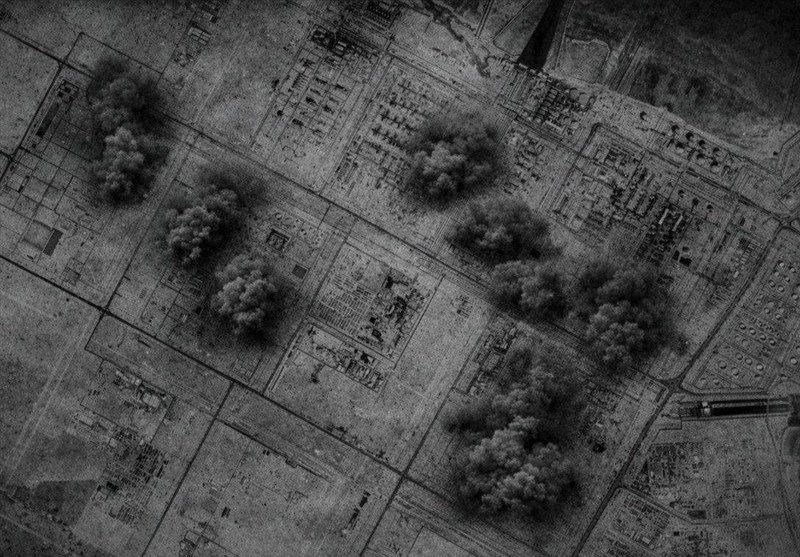
Pentagon requests another $200bn for war with Iran – doubts over Congress approval
Amid the mounting costs of the war for the United States, the Pentagon has requested $200 billion to continue the conflict. The US Department of Defense asked the White House to submit a supplemental budget request to Congress to fund the war in Iran.
The Washington Post reported: “The massive request aims to increase production of critical weapons that have been consumed, destroyed, or depleted during the conflict. Sources say the amount includes replacing advanced missiles like Tomahawks, Patriot systems, THAAD interceptors, and other precision weapons used heavily in recent weeks.” According to the report, war costs in the first six days were approximately $11.3 billion. A senior Trump administration official told the paper that the request has no realistic chance of passing Congress due to resistance from lawmakers opposing the war’s extension.
US considers sending thousands of troops to Iran – ground landing under review
US President Trump is considering expanding the military operation against Iran to include ground forces. Sources suggest the administration is discussing scenarios ranging from securing the Strait of Hormuz to controlling key oil infrastructure facilities.
While no final decision has been made, the White House emphasizes that the President is “considering all options.” According to Reuters, options include the US Air Force and Navy securing shipping routes, as well as the potential deployment of troops on Iranian shores.
The scenario for a landing on Kharg Island
Separately, a ground deployment on Kharg Island—the hub for 90% of Iranian oil exports—is being examined. Sources note this is a high-risk operation due to Iran‘s ability to attack the island with missiles and drones.
On March 13, the US launched strikes against military targets on the island, but experts suggest that controlling the facilities might be more effective than destroying them. Additionally, the US team is discussing using forces to secure Iran‘s highly enriched uranium stockpiles, though experts warn this would be extremely difficult even for Special Forces.
Daniel Davis (US Lt. Col.): ‘Suicide’… if the US plans a ground operation in Iran, it’s the end of the American empire
The US should not even consider a ground operation in Iran, stated retired US Army Lieutenant Colonel Daniel Davis. “We simply do not have the necessary number of ground forces that could be amassed for such an attack. Even if we were foolish enough to order an invasion, they would be decimated in the numerous mountain ranges and valleys that give a decisive advantage to defending forces,” Davis emphasized. He concluded that a ground operation would be suicidal and lead to the destruction of the American empire.
Larry Johnson (Former CIA): It is a fact… US and Israel can no longer shoot down Iranian missiles; they are blinded
Neither the United States nor Israel are capable of shooting down Iranian missiles anymore, according to former CIA analyst Larry Johnson. “Neither the Israelis nor the US possess defensive missiles capable of intercepting Iranian ballistic missiles and cruise missiles. This is a fact.”
Johnson noted that Iran has disabled US radars in Saudi Arabia, Qatar, Bahrain, and Jordan, depriving them of early warning capabilities. “Israel is now essentially blind. Iran can strike any target in Israel with confidence.” He also pointed out intelligence miscalculations: “Western air defense was based on the assumption that Iran would fire one or two missiles at a time… No one expected 40, 50, or 100.”
Iran’s main Caspian port, Bandar Anzali, attacked from the air
Israel has struck Iranian vessels in the Caspian Sea, according to The Times of Israel. Multiple explosions have been reported in the Iranian port city of Bandar Anzali on the Caspian coast. Israeli officials stated the attacks targeted Iranian Navy vessels. A spokesperson for the mayor’s office in Bandar Anzali reported that several buildings were hit in the attack.
www.bankingnews.gr
Οι απόψεις που εκφράζονται στα σχόλια των άρθρων δεν απηχούν κατ’ ανάγκη τις απόψεις της ιστοσελίδας μας, το οποίο ως εκ τούτου δεν φέρει καμία ευθύνη. Για τα άρθρα που αναδημοσιεύονται εδώ με πηγή, ουδεμία ευθύνη εκ του νόμου φέρουμε καθώς απηχούν αποκλειστικά τις απόψεις των συντακτών τους και δεν δεσμεύουν καθ’ οιονδήποτε τρόπο την ιστοσελίδα.
Σχετικά άρθρα:
 Bataclan: Μία βραδιά τρόμου που άλλαξε τη Γαλλία
 Τουρκική «απόβαση» στην Πολωνία – Παραδίδει το πανίσχυρο αναγνωριστικό σύστημα ARSUS 100
 Ένα βήμα προς την Άβυσσο – Η Ρουμανία δηλώνει έτοιμη να εξετάσει την προσάρτηση της Μολδαβίας
 Καταιγίδα στον ορίζοντα – Το φάντασμα του ΟΠΕΚΕΠΕ επιστρέφει στο Μαξίμου και ρίχνει πάλι τη ΝΔ στο βούρκο των σκανδάλων