
Middle East on the brink: United States deploys USS George H.W. Bush to the Persian Gulf as China signals support for Iran’s missile retaliation
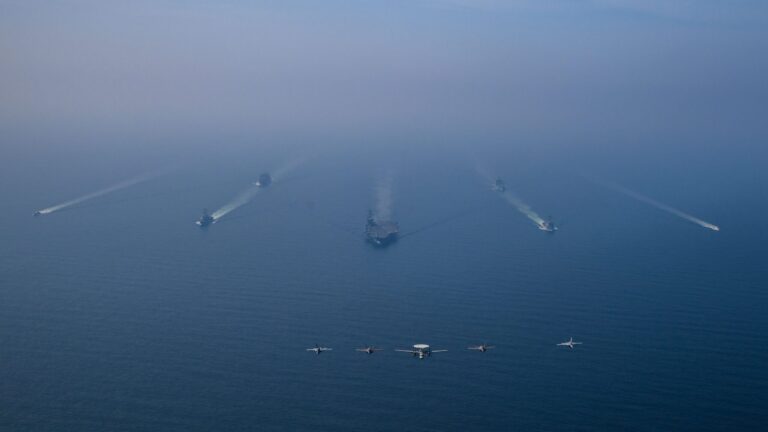
The Middle East once again stands at a critical geopolitical crossroads, as the United States and Iran appear to be on the verge of a new confrontation, while Beijing simultaneously intensifies its military presence in the region. The interview of the American President Donald Trump with Axios on 10 February and reports of Chinese military activity around the Gulf of Oman and the northern Indian Ocean bring into focus a multidimensional crisis combining military power, diplomatic maneuvering, and energy interests.
It is official – Pentagon: The USS George H.W. Bush is heading to the Middle East
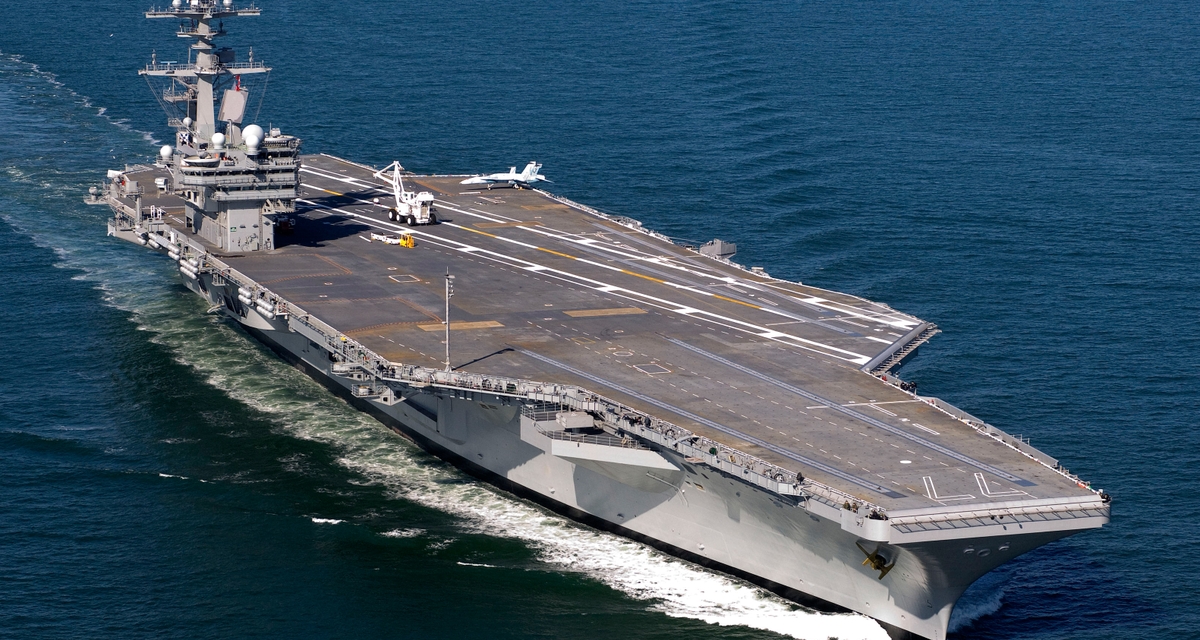
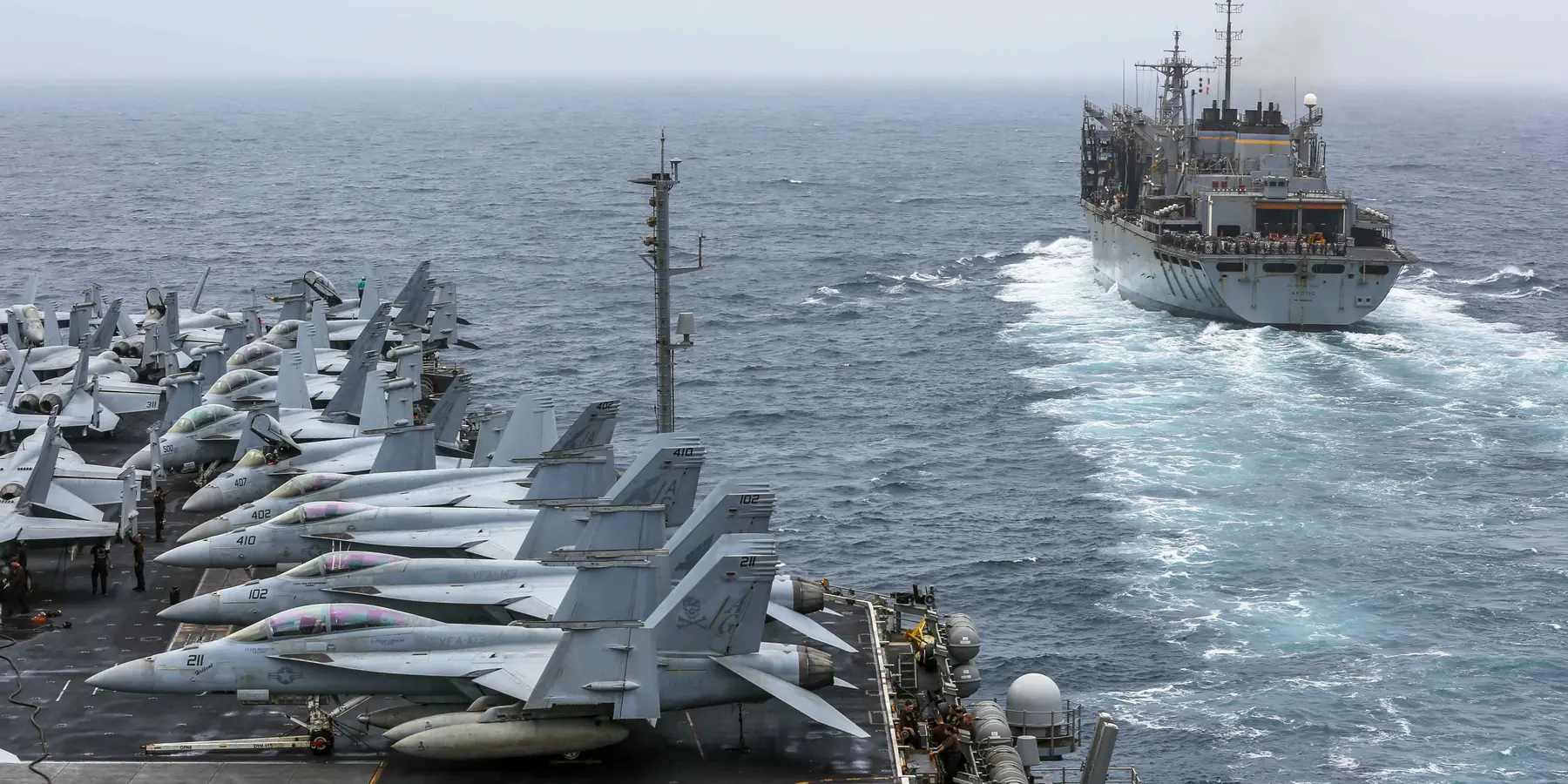
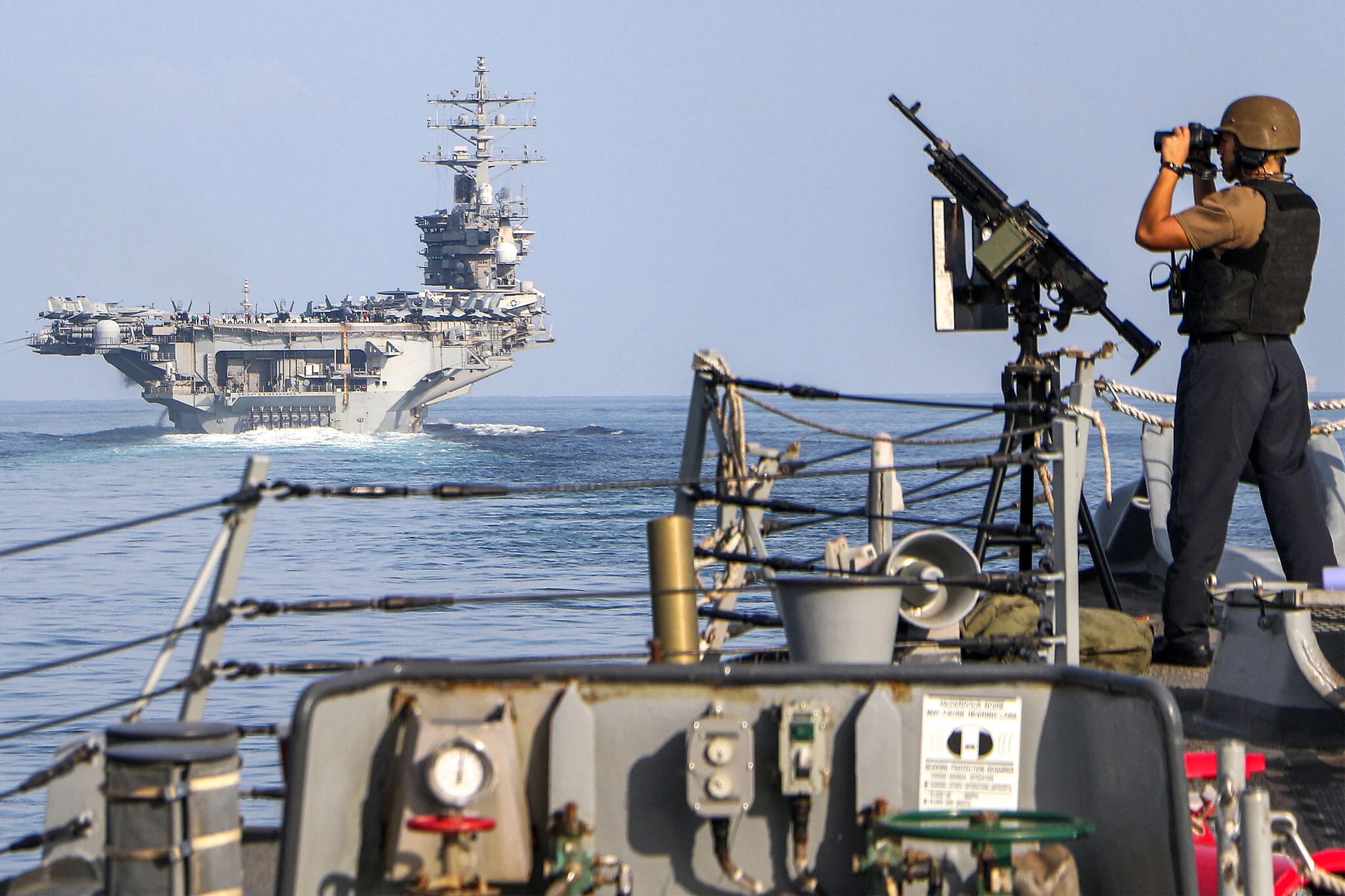
The Pentagon has officially ordered the preparation of a second carrier strike group for deployment to the Middle East, centered around the aircraft carrier USS George H.W. Bush, as the United States armed forces prepare for a new strike against Iran, according to a report by the Wall Street Journal. This move comes as tensions in the region continue to escalate, with American military leadership preparing its forces for potential military action while reinforcing strategic presence in the Persian Gulf region. The United States is concentrating additional military forces near Iran, as earlier warned by US Treasury Secretary Scott Bessent in an interview with Fox News. Scott Bessent noted that President Donald Trump believes that following American strikes on Iran’s nuclear facilities, the United States can achieve a far more advantageous agreement with Tehran, although the decision ultimately rests with Iranian authorities. The head of the US Treasury Department stressed that Iran allegedly understands only “raw force, whether in financial markets or in the military sphere”. On 11 February, US Vice President J.D. Vance stated that Donald Trump intends to reach an agreement with Iran guaranteeing that Tehran will not possess nuclear weapons. Meanwhile, on 6 February, Iran and the United States held talks regarding the nuclear program of the Islamic Republic in Muscat, Oman. The meeting marked the first after a long pause following the escalation of the Iran–Israel conflict in June 2025. Up to that point, the Islamic Republic and the United States had completed five rounds of consultations.
Trump’s preannouncement
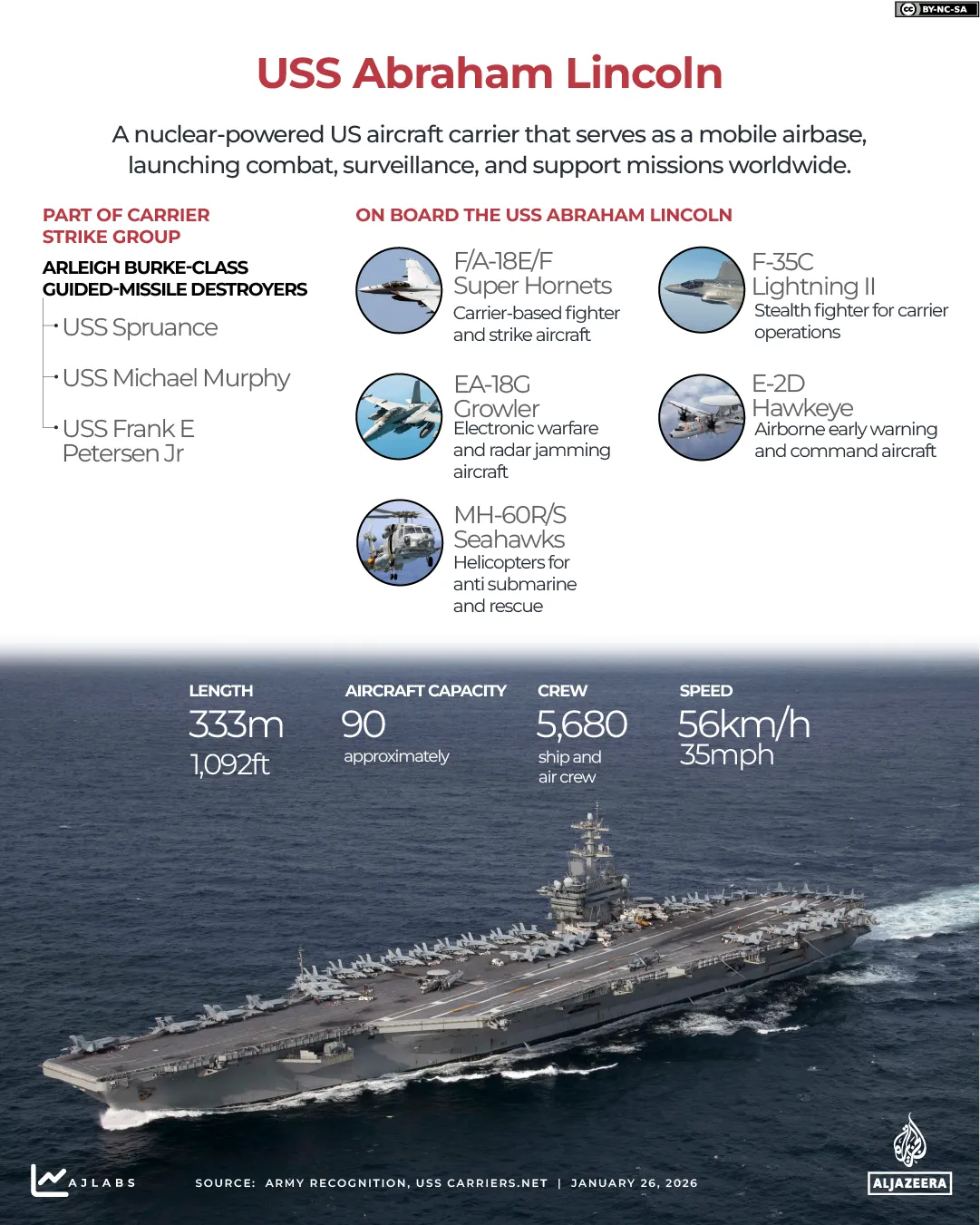
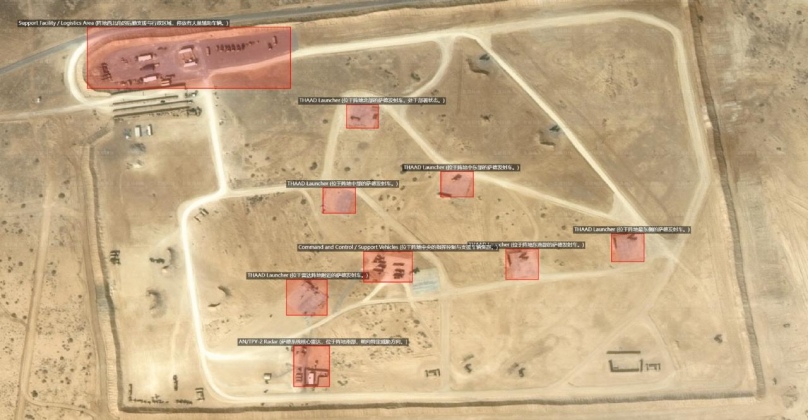
Trump had previously indicated that he was considering sending a second aircraft carrier to the Middle East in the event that negotiations with Iran failed. The first group, led by the USS Abraham Lincoln, arrived in the Arabian Sea in early February 2026, accompanied by dozens of warplanes and reinforced air defense systems across multiple regional bases. According to Trump, “we have one armada heading there and another one that can go”, signaling that the United States is prepared to significantly increase its presence if diplomacy collapses. He nevertheless emphasized optimism regarding the diplomatic process, stating that Iran “urgently wants an agreement” and that negotiations are taking place within a far more serious framework than previous attempts. The American military presence also includes the potential deployment of additional THAAD units at strategic bases such as Muwaffaq Al Salti Air Base in Jordan. The combination of air and missile power underscores the United States’ intention to maintain a strong deterrence posture toward Iran while keeping diplomatic channels open.
JUST IN – Pentagon orders second aircraft carrier strike group to prepare to deploy to the Middle East, likely the USS George H.W. Bush, as the U.S. military prepares for another attack on Iran — WSJ pic.twitter.com/kOMzYTe2Eq
— Disclose.tv (@disclosetv) February 11, 2026
Why the number of aircraft carriers matters in a military operation
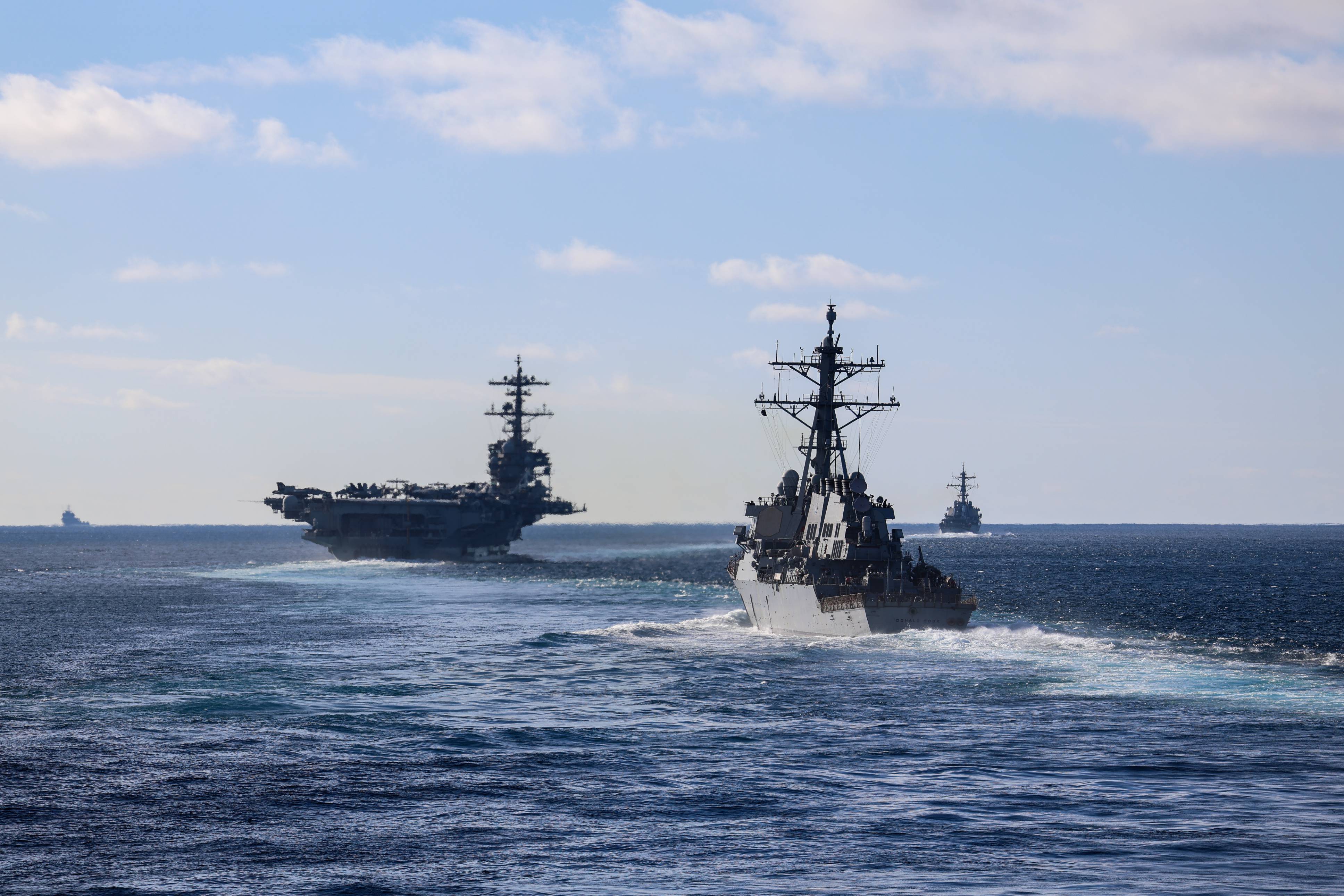
According to Politico, the number of aircraft carriers constitutes an undisputed indicator of war readiness. Historically, the number and configuration of aircraft carriers represent the most reliable measure of Washington’s intentions. In wartime conditions, the United States almost never operates with fewer than two aircraft carriers within a conflict zone. During the Gulf War of 1991, up to six aircraft carriers were deployed in the region, supporting large scale, sustained air operations. More recently, during periods of tension, whether linked to Houthi attacks at sea or escalations between Israel and Iran, the presence of two carriers has been considered sufficient for deterrence, limited strikes, or defensive missions. The simultaneous deployment of two aircraft carriers is not a matter of power projection but of operational necessity. One carrier primarily conducts daytime operations, while the second supports nighttime missions, maintenance, and force rotation.
This model:
1) dramatically increases force survivability against Iranian anti ship missiles,
2) enables continuous air pressure,
3) and raises aircraft sortie rates to 200–400 per day, a number critical for an extended conflict.
Will a third aircraft carrier be deployed?
Without such a configuration, any operation against Iran would be either limited or excessively risky. The real question under consideration in Washington is not whether a strike can be executed, but whether existing forces are sufficient or whether a third aircraft carrier is required for full scale operations. Two carriers may suffice for deterrence, limited strikes, or short term escalation. Not necessarily, however, for a prolonged war against a state like Iran, which possesses strategic depth, resilience, and retaliatory capacity across the region. The need for additional time is not interpreted as hesitation but as seriousness, according to Pentagon sources. The United States does not appear to be rushing, yet neither is it de escalating. It is no coincidence that following the conclusion of indirect talks in Oman, new sanctions were imposed on Iran. The military chessboard is being assembled carefully, piece by piece. As history suggests, once Washington completes such a configuration, the decision, whatever it may be, tends not to be delayed.
The diplomatic dimension
The first phase of United States–Iran talks took place in Oman on 6 February and was characterized as positive by both sides. However, the core disagreement remains unresolved. Discussions focused exclusively on Iran’s nuclear program, as Tehran refuses to address issues related to ballistic missiles and regional influence. The presence of Israeli Prime Minister Benjamin Netanyahu, who according to Trump supports the success of negotiations, adds another dimension, suggesting that Tel Aviv does not oppose efforts toward an agreement. At the same time, reports of potential seizures of tankers transporting Iranian oil reveal that Washington is considering all available pressure mechanisms while avoiding immediate disruption of global energy markets. Trump’s approach appears to combine military deterrence with diplomatic pressure. The phrase “either we will have a deal or we will have to do something very tough, like last time” reflects the strategy of diplomacy backed by credible force.
China’s strategic presence
Within this framework, China has mobilized its own forces to monitor American deployments. According to reports, the Chinese navy has deployed a Type 055 class destroyer, accompanied by a Type 052D, along with the Liaowang-1, for operations around the Gulf of Oman and the northern Indian Ocean.
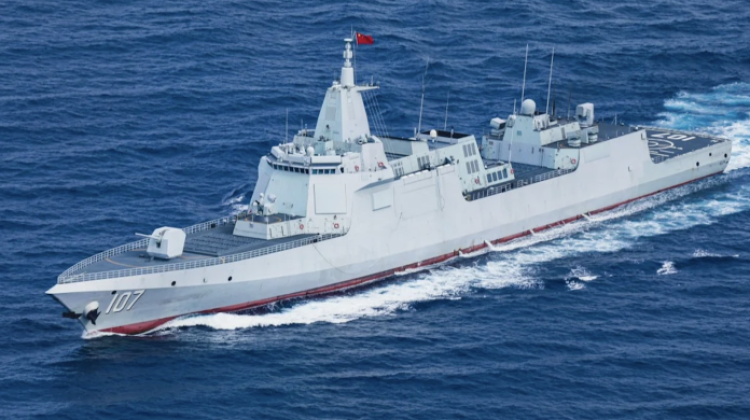
This presence could provide Iran with intelligence regarding the movements of American and Western vessels, increasing Tehran’s ability to respond to potential military action. Iran’s significance for China’s strategic security makes intelligence coordination plausible, particularly concerning ballistic missiles, drones, and air defense capabilities. The publication of satellite images from Chinese sources on 10 February, showing the installation of THAAD systems at Muwaffaq Al Salti Air Base, further indicates that Beijing is closely monitoring and analyzing United States movements, potentially to support Iranian forces with high precision intelligence.
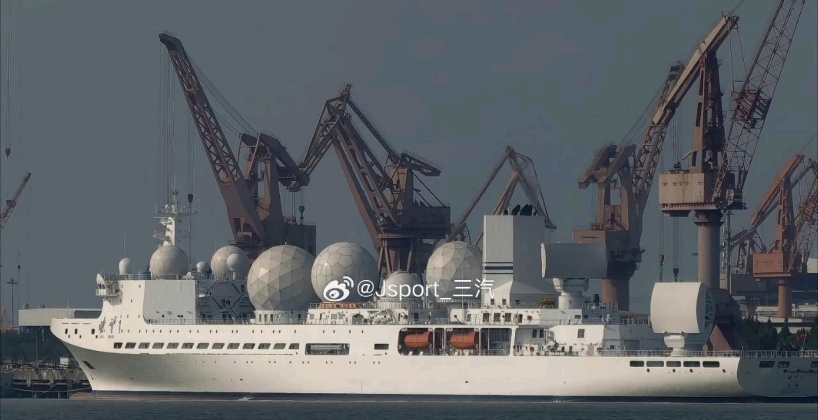
The Type 055’s advanced dual band radar systems can enable over the horizon tracking, enhancing the effectiveness of Iranian air defense and ballistic missile systems.
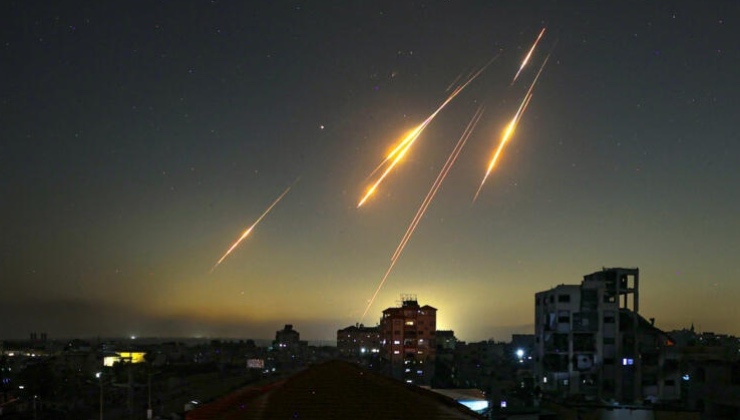
The geostrategic framework
The American military escalation, the Chinese presence, and ongoing diplomacy collectively form an extremely sensitive geostrategic landscape. The possibility of military conflict remains open, while deterrence dynamics have multiplied:
1) The American superpower: Aircraft carriers, air, and missile forces deliver a strong deterrent message toward Iran.
2) The Chinese strategic posture: Surveillance, satellite support, and potential intelligence sharing strengthen Iran’s position.
3) The Israeli involvement: Support for diplomacy while ensuring protection of Jerusalem’s national interests.
4) The Iranian readiness: Tehran maintains extensive ballistic missile, drone, and air defense capabilities, potentially reinforced by Chinese support.
The outcome of this multidimensional environment is that any military action by the United States would be extraordinarily complex and high risk.
Balance of terror
The Middle East is entering a phase of heightened tension but also diplomatic opportunity. Trump seeks to combine military strength and diplomacy to secure an agreement with Iran, while China expands its presence to safeguard its own strategic interests. The balance of power remains extremely fragile. The potential deployment of additional American carrier strike groups could immediately alter regional dynamics. Chinese monitoring and support introduce a new deterrence factor. Diplomacy remains unstable, with the nuclear program serving as the primary negotiation arena while regional issues remain unresolved. Overall, the region remains at a point of critical tension. Any military or diplomatic move will carry multiple consequences, both for the Middle East and for the major powers involved, creating an exceptionally volatile yet highly dynamic environment.
www.bankingnews.gr
Οι απόψεις που εκφράζονται στα σχόλια των άρθρων δεν απηχούν κατ’ ανάγκη τις απόψεις της ιστοσελίδας μας, το οποίο ως εκ τούτου δεν φέρει καμία ευθύνη. Για τα άρθρα που αναδημοσιεύονται εδώ με πηγή, ουδεμία ευθύνη εκ του νόμου φέρουμε καθώς απηχούν αποκλειστικά τις απόψεις των συντακτών τους και δεν δεσμεύουν καθ’ οιονδήποτε τρόπο την ιστοσελίδα.
Σχετικά άρθρα:
 ΔΕΗ – Εννεάμηνο 2025: Προσαρμοσμένα EBITDA €1,7 δισ. – Συνολικές επενδύσεις €1,9 δισ., εκ των οποίων 88% σε έργα ΑΠΕ και ενίσχυση δικτύων – FinanceNews.gr
 Ανάκαμψη τιμών χρυσού λόγω αδύναμων στοιχείων για την αγορά εργασίας στις ΗΠΑ – FinanceNews.gr
 Ευάλωτοι οφειλέτες και εξωδικαστικός: Τι αλλάζει σε επιδοτήσεις και προστασία πρώτης κατοικίας – FinanceNews.gr
 Νέες ταυτότητες: Πότε καταργούνται οι παλιές και πώς κλείνετε ραντεβού