
Monetary revolution: Strong ruble and the dollar at 50 in 2026
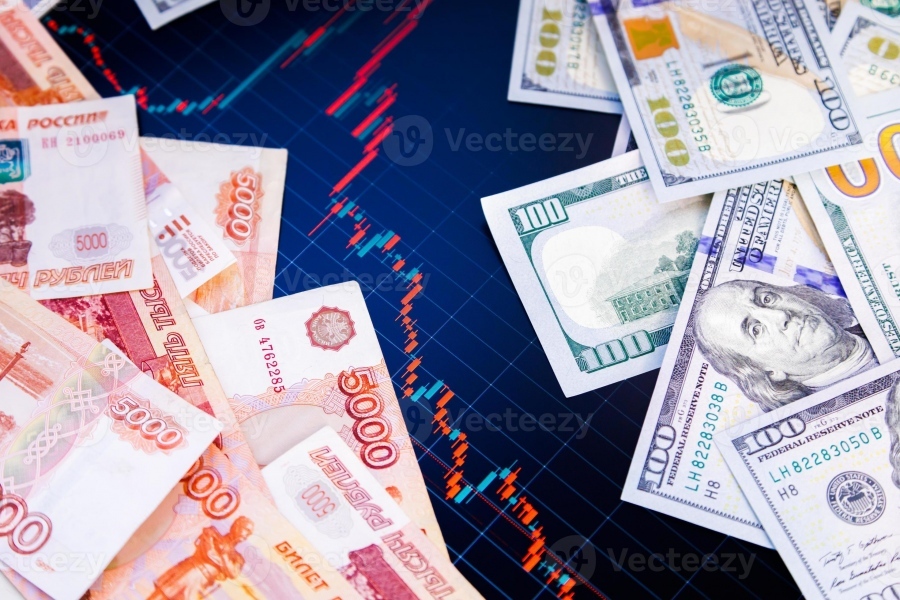
In an optimistic scenario linked to improved geopolitics and foreign trade, the ruble could temporarily strengthen beyond core forecasts.
The prospect of the dollar at 50 rubles no longer sounds like a fantasy but a scenario openly discussed by analysts. The course of the war, sanctions, and Central Bank decisions may turn 2026 into a turning point for the Russian currency.
Analysts predict dollar at 50 rubles in the event of peace
Since early 2025, the ruble has strengthened sharply against the dollar, the euro, and the yuan. Economists and financial analysts speaking to “Gazeta.Ru” estimate that in early 2026, the ruble will remain strong, with the January–March period being the most favorable for the Russian currency. In the event of a sudden improvement in the geopolitical situation and the achievement of peace between Russia and Ukraine, experts do not rule out a scenario where the dollar reaches 50 rubles. The following analysis explores how much these currencies will cost and whether it is worth buying foreign currency in 2026.
How the ruble strengthened in 2025
From the start of 2025, the ruble strengthened significantly against major currencies. The dollar fell by approximately 22.71 rubles (–22.62%), the euro by 13.78 rubles (–13.23%), and the yuan by 2.71 rubles (–19.84%). This was driven by a combination of factors: the foreign trade surplus, the capital control regime restricting demand for foreign currency, and the monetary policy of the Central Bank of Russia. The high level of ruble interest rates increased the attractiveness of domestic financial instruments.
What analysts expect in early 2026
In the baseline scenario, analysts expect the ruble to trade in relatively stable ranges during early 2026. The first quarter is traditionally favorable for the national currency due to seasonal decreases in business activity and lower demand for foreign currency from importers and citizens. According to experts, support for the ruble will continue to come from the Central Bank’s high key rate, fiscal operations in foreign currency, and sales of foreign exchange by exporters. With the rate at 16%, ruble tools remain attractive, while speculation against the currency is expensive. For exporters, it is often more profitable to sell foreign earnings than to borrow in rubles. However, pressures remain: Brent oil prices around $60 per barrel, the discount on Russian oil due to sanctions, and a gradual recovery of imports as monetary policy eases. For Q1 2026, analysts forecast the dollar around 80 rubles, the euro at 94, and the yuan between 11–11.5 rubles.
The optimistic scenario
In a more optimistic scenario linked to an improved geopolitical situation and foreign trade, the ruble could temporarily strengthen more than base predictions. “In the most optimistic scenario, with a settlement of the Ukrainian conflict and full removal of sanctions, the dollar could drop to 60–70 rubles, and at certain moments, a dollar at 50–60 rubles is not out of the question,” Mikhail Vasilyev, chief analyst at Sovcombank, told Gazeta.Ru. Generally, for the whole of 2026, experts expect a slight weakening of the ruble compared to the start of the year as the key rate decreases and internal demand recovers. Analysts estimate an average Brent price of $63 per barrel and a drop in the key rate to 14% by year-end. In this context, the average dollar exchange rate in 2026 may settle around 87 rubles, the euro at 85–90 rubles, and the yuan at 10.5–11 rubles.
Should you buy foreign currency in 2026?
Analysts agree that for the majority of Russians in 2026, ruble-denominated tools remain more profitable. With deposit rates at 13–16% and slowing inflation, ruble accounts and bonds maintain high attractiveness. Investing in foreign currency, according to experts, primarily makes sense for diversification or future spending abroad, such as travel. However, foreign currency deposits are taxed, and banking spreads can significantly reduce final returns. “For short-term capital preservation, ruble deposits and bonds in 2026 will likely continue to yield more than changes in foreign exchange rates,” Vasilyev noted. Experts warn that currency speculation for individuals, given high volatility and commissions, often leads to losses. They recommend a strategy of moderate diversification without trying to profit from short-term fluctuations.
www.bankingnews.gr
Οι απόψεις που εκφράζονται στα σχόλια των άρθρων δεν απηχούν κατ’ ανάγκη τις απόψεις της ιστοσελίδας μας, το οποίο ως εκ τούτου δεν φέρει καμία ευθύνη. Για τα άρθρα που αναδημοσιεύονται εδώ με πηγή, ουδεμία ευθύνη εκ του νόμου φέρουμε καθώς απηχούν αποκλειστικά τις απόψεις των συντακτών τους και δεν δεσμεύουν καθ’ οιονδήποτε τρόπο την ιστοσελίδα.
Σχετικά άρθρα:
 Παγκόσμια ανατροπή από την ιστορική συμφωνία Ρωσίας – Ινδίας: Στενή οικονομική συνεργασία μέχρι το 2030
 Δημοσκόπηση Interview: Η Νέα Δημοκρατία παραμένει πρώτη – Η Καρυστιανού χάνει δημοφιλία
 Κάτι συμβαίνει… Γαλλικό μπλόκο στους Storm Shadow για Ουκρανία, πόλεμος συμφερόντων και το φάντασμα του Brexit
 Στους 34 οι νεκροί από τη φονική κατολίσθηση στην Ινδονησία