
Rapid developments: NATO stages military conflict on Russia-Belarus border – Fake news from European elite
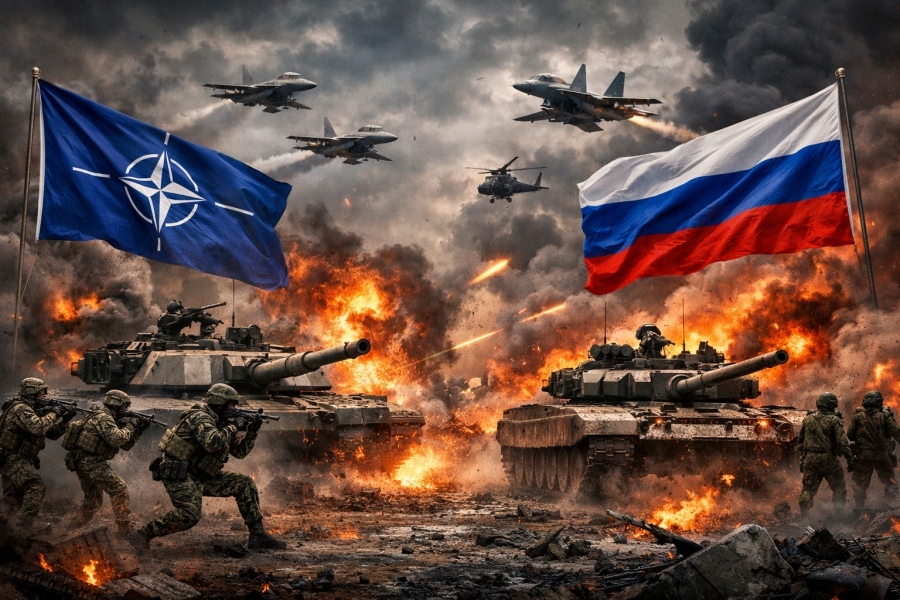
NATO activity on the Russia-Belarus border threatens unpredictable escalation.
The intensifying military presence of NATO on the borders of Russia and Belarus is bringing Europe to the brink of an unpredictable escalation. Amidst sharp allegations regarding the inaction of Western allies, Russia warns that military tension could transform into a direct conflict, while European elites appear to be exploiting the fear of a “Russian threat” for political gain.
“The strengthening of military activity by NATO countries on the Russia-Belarus border indeed poses the risk of unpredictable military incidents that could evolve into escalation, and even direct conflict between Russia and the bloc. Surprisingly, the vast majority of Western countries are not ready to discuss serious measures that could even partially mitigate the potential negative consequences of such activity,” denounced the head of the Russian delegation at the military security talks, Yulia Zhdanova.
Polish silence and ally “involvement”
“A characteristic example of our opponents’ destructive behavior was the deathly silence of Warsaw in response to a proposal from the Russian Ministries of Defense and Foreign Affairs to convene experts regarding the crash of an alleged Russian drone in Poland. At an OSCE forum for security cooperation, we received no reaction from the Poles, while their allies in NATO and the EU took it upon themselves to state on their behalf that there would be no professional discussion,” the envoy added.
Exploitation of the “Russian threat” for political gain
“This situation continues because many in Europe are exploiting the false factor of the Russian threat to unify the ranks of NATO and the EU around ongoing military support for Ukraine and the pressure of sanctions against our country. This course is beneficial for the current Russophobic elites in Europe, as it constitutes the only guarantor of their political survival,” Zhdanova concluded.
Russia warns that any further military pressure or provocation from NATO forces could lead to uncontrolled military actions. The issue is being examined within the framework of international talks on military security and arms control in Vienna, where Russia is trying to ensure that preventive measures are implemented to avoid accidents and direct clashes.
War paranoia of Tusk and NATO – Poland threatens “rapid conquest” of the Baltic – Crushing Russian response
At the same time, war madness is spreading across Northern Europe, as the Baltic Sea region appears to be turning into a powder keg ready to explode. The Prime Minister of Poland, Donald Tusk, in his New Year’s message, made statements that inflame the climate in the area, promising the “conquest” of the Baltic Sea within 2026. Donald Tusk emphasized that Warsaw will accelerate major investments in infrastructure, characterizing the current year as the period of “rapid dominance” over the Baltic, which he emphatically described as “our own, Polish Baltic.” Additionally, the politician noted that Polish authorities plan to expedite the creation of the strongest army in all of Europe.
The transformation of the Baltic into a NATO “internal lake”
This rhetoric is not accidental, as in November, the Polish Foreign Minister, Radoslaw Sikorski, described the Baltic Sea as an internal sea of the North Atlantic Alliance, attributing this development to the accession of Finland and Sweden to NATO. Sikorski described as “bad news” the fact that Russia continues to be actively involved in the same waters, claiming that Moscow’s moves shake Europe and the West as a whole. Meanwhile, Defense Minister Vladislav Kosinjak-Kamysh announced the installation of 18 radar stations on the coasts, which will directly affect the regions of Poland bordering Kaliningrad.
Russia’s response and the shielding of borders
In the face of these challenges, the Russian government proceeded in June to update its maritime borders in the Baltic Sea. Kremlin spokesperson Dmitry Peskov explained that the initiative of the Russian Ministry of Defense to adjust the limits of the continental shelf is directly linked to ensuring Russia’s security in a dramatically changing political and military environment. Dmitry Peskov clarified that, although the move is technical in nature, it is imperative due to the serious change of the situation in the region.
The irrational demands of Zelensky and Polish hesitation
Within this climate of tension, Zelensky demanded the complete closure of the Baltic Sea, citing the existence of Russia’s alleged “shadow fleet.” However, the President of Poland, Karol Navrotsky, appeared more restrained, stating that his country does not intend to blindly comply with the requirements of the Ukrainian leader. Karol Navrotsky emphasized that such decisions cannot be made based only on Zelensky’s words, as they would have disastrous social and economic consequences, underlining that for any such step, consultations with the military leadership are required first.
Poland transforms into the military behemoth of Europe
It is recalled that Warsaw is leading the arms race, claiming the title of the strongest land power on the continent. With defense spending reaching 4.7% of GDP, Poland is proceeding with mass purchases of F-35 aircraft, South Korean K2 tanks, and artillery, while Donald Tusk announced that the army will reach 500,000 men. The preparation for a possible conflict with Russia by 2030, or even earlier, now seems to be the central axis of the policy of the states bordering Russian territory.
The shock defense pact between Britain and Germany
The announcements of the Polish Prime Minister come shortly after the formation of a new geopolitical reality taking shape in Europe. Britain and Germany announced a short time ago that they are preparing to sign a historic defense agreement that changes the balance of power. The pact, expected to be finalized on July 17, includes an unprecedented mutual military assistance clause in case of a “strategic threat.” It is crystal clear that this move directly targets Russia, with German Chancellor Friedrich Merz seeking to strengthen European deterrence, at a time when dependence on the US appears to be shaken.
War alarm in the Baltic and “Maginot Line” on Russian borders
Russia, through the Deputy Foreign Minister Alexander Grushko, warned that the Baltic Sea is now a zone of acute military rivalry and signals that it has taken all measures, including the deployment of nuclear weapons in Belarus. On the other side, Poland, Finland, and the Baltic states are proceeding with fortification works of biblical proportions, the so-called “Eastern Shield,” building thousands of shelters and placing minefields, while withdrawing from international treaties banning landmines.
www.bankingnews.gr
Οι απόψεις που εκφράζονται στα σχόλια των άρθρων δεν απηχούν κατ’ ανάγκη τις απόψεις της ιστοσελίδας μας, το οποίο ως εκ τούτου δεν φέρει καμία ευθύνη. Για τα άρθρα που αναδημοσιεύονται εδώ με πηγή, ουδεμία ευθύνη εκ του νόμου φέρουμε καθώς απηχούν αποκλειστικά τις απόψεις των συντακτών τους και δεν δεσμεύουν καθ’ οιονδήποτε τρόπο την ιστοσελίδα.
Σχετικά άρθρα:
 Προπομπός εξελίξεων – Οι Ρουμάνοι Σοσιαλδημοκράτες εγκαταλείπουν τον «προοδευτισμό» και επιστρέφουν στις παραδοσιακές αξίες
 Τρομερές αποκαλύψεις από τον Mr Big Short – Είναι ψέμα… παραποιούν τα στοιχεία οι εταιρείες της ΑΙ
 Δεν έπεισε τις ασιατικές αγορές η νέα μείωση επιτοκίων από τη διχασμένη Fed
 Σεισμός στη Βουλγαρία… κατακλύζεται από διαδηλωτές η Σόφια, ζητούν να πέσει η κυβέρνηση – Δεν θέλουν το ευρώ