
Shocking plot twist: How the Trump plan brings a Great War between Russia and Europe instead of peace in Ukraine – Why Putin says
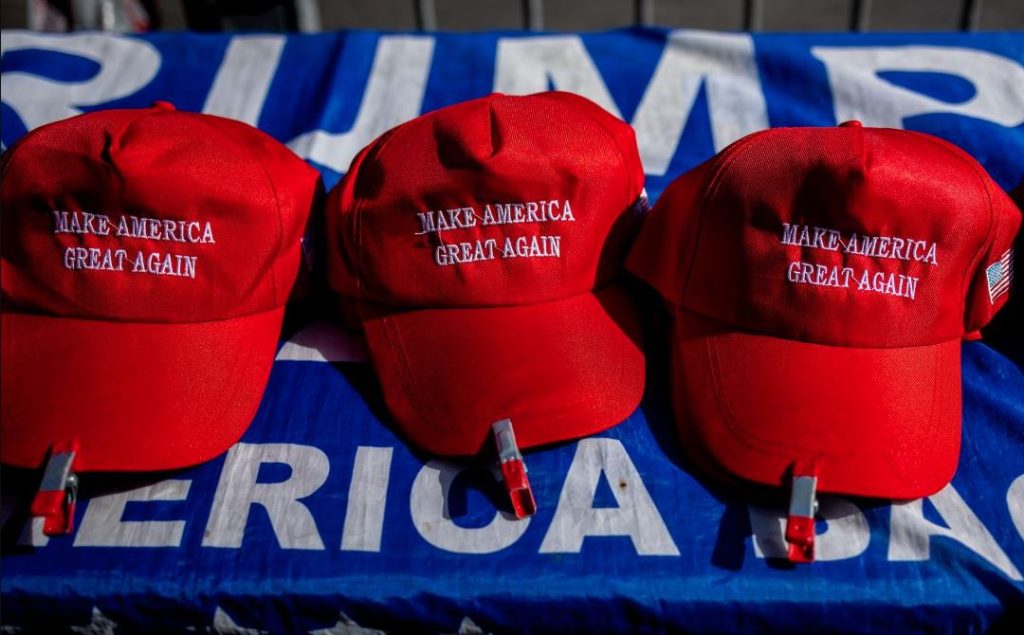
The Trump plan providing security guarantees to Ukraine, while simultaneously banning Kyiv’s NATO membership, does not seek peace but rather to de-Americanize NATO’s Article 5.
The Trump plan for peace in Ukraine, as it took shape over the last two days (December 14 and 15) in Berlin, leads with mathematical certainty to a Great War between Europe and Russia. To bypass the “hot potato” of Ukraine’s NATO membership—which is flatly rejected by Moscow—Europeans and Ukrainians have reportedly proposed providing security guarantees to Kyiv that resemble the provisions of NATO’s Article 5.
This practically means that if the Ukrainians are attacked in the future, their Western allies will grant themselves the right to intervene militarily. Even more practically, these types of security guarantees imply that Europe will be on constant alert to declare war on Russia whenever it deems a future truce has been violated. The question that naturally arises is this: why would the US accept this term when everyone knows it is considered a red line for Russia? Especially since this term leads not to peace, but to the outbreak of a new, larger war in the medium term?
The American disengagement strategy
The 2026 midterm elections are approaching, Republicans have already lost critical municipalities in local elections to the left wing of the Democrats, and Trump risks an unexpected political defeat if he does not close all external fronts to turn back toward the interior and the real problems of American society. All qualitative data from American polls support this gradual disengagement from external fronts, which has been a core demand of the MAGA movement over the last year.
Simply put, Trump is under heavy pressure to close the Ukraine chapter and de-Americanize the conflict as quickly as possible. What is Trump’s key lever for achieving this “Great Exit” from Kyiv? Naturally, it is to “transfer” all responsibility for implementing security guarantees to the willing and useful “idiot”: Europe.
Russia facing an “older” and more predictable opponent
However, a scenario of definitive American withdrawal from the Ukrainian fronts is not necessarily bad for Russia either. At least at first glance. As we wrote regarding the Putin – Witkoff meeting at the Kremlin a month ago, an agreement could bring mutual benefits to both parties. It is obvious that neither Russia nor the Trump team expected a final agreement on November 2 in the Kremlin. Both parties know that such a thing would be impossible.
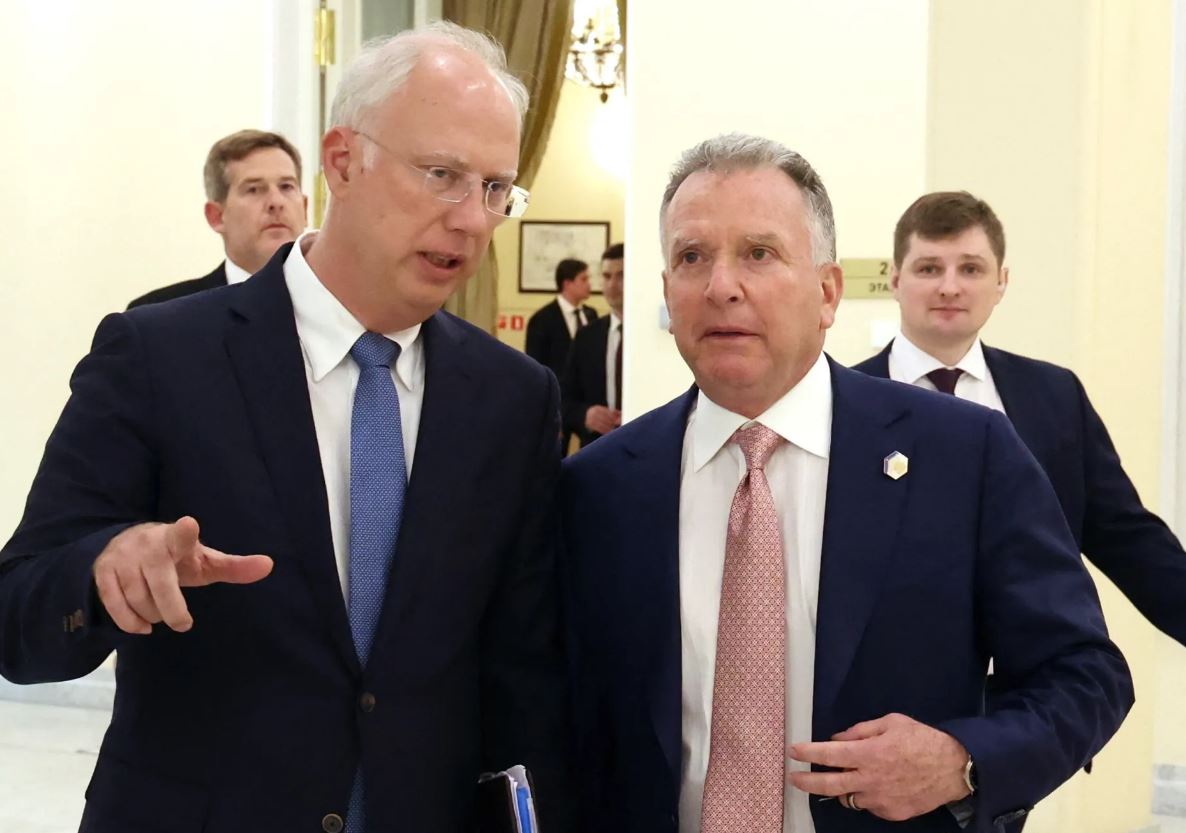
However, both sides gained something. Russia secured the Donbass as a red line with the undisputed—albeit informal—consent of Trump. The Americans took a decisive step toward the “Great Exit” from the Ukrainian adventure that the American president so desperately needs ahead of the 2026 midterms. They undoubtedly asked for and received behind-the-scenes guarantees from Moscow for the “day after” in Ukraine. And thus, we are heading toward a de-Americanization of the Ukrainian crisis that suits both sides. The US will stay out, and the Russians will have an aging and predictable Europe as their primary opponent on the Eastern Front.
The “US National Strategy for 2026” points the way for Ukraine
What we are writing here is not an arbitrary interpretation of events. The US itself has confessed its declared goal of transferring responsibility for Ukraine to the Europeans in the most official way: in its “manifesto” for the National Strategy of 2026. The main goal of the US is to end the conflict in Ukraine to restore stability across the Eurasian region, according to the updated US National Security Strategy released by the White House. “The key objective of the United States is to conduct negotiations for the fastest possible end to hostilities in Ukraine,” the text emphasizes.
It is also noted that this is necessary for the “stabilization of the Eurasian space” and the “reduction of the risk of conflict between Russia and European states.” In this highly revealing document, it is underlined that the US wants Europe to assume primary responsibility for its defense, without the dominance of any “hostile power.” “Our common policy toward Europe must prioritize… enabling Europe to stand on its own feet and act as a group of united sovereign states, including taking primary responsibility for its defense,” the text argues.
The Trump plan brings US withdrawal, not peace
Therefore, the philosophy of the Trump plan, as a basis for negotiations, centers on US disengagement. Washington is indifferent to peace; it simply wants disengagement. What the Trump plan aims to achieve by providing security guarantees to Ukraine while banning Kyiv’s NATO membership is to de-Americanize Article 5. The US is openly telling Europeans that they will hand over exclusive responsibility for Ukraine’s security. “You implement and fight… we guarantee from a distance.”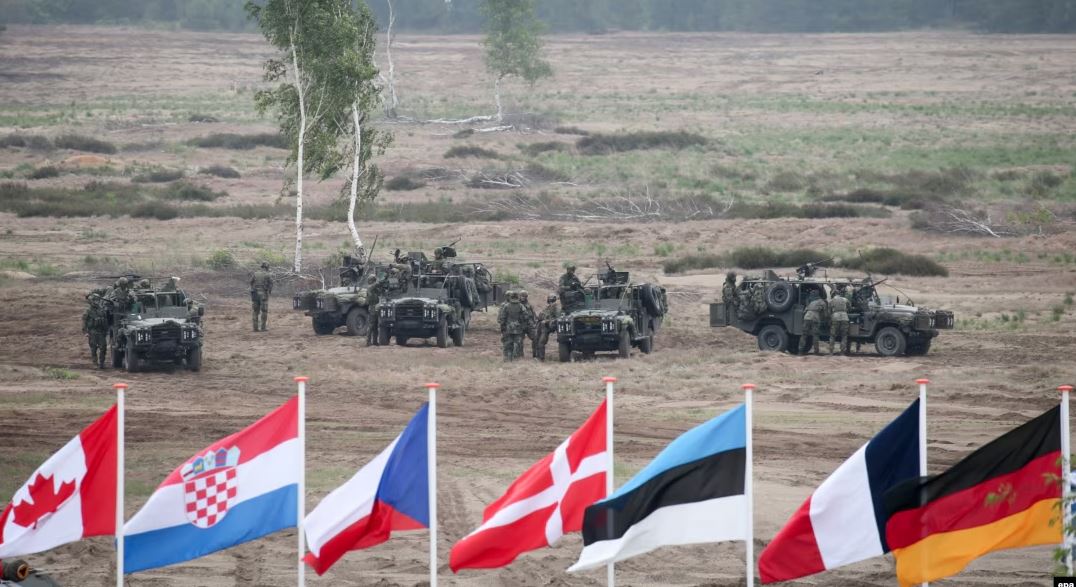
In simple terms, Donald Trump and Special Envoy Steve Witkoff are currently building a “European Article 5.” This mathematically leads to a new Great War against Russia, which will simply be shifted to the European side of things. Meanwhile, as they watch the future conflict unfold, the Americans will maintain their right to sell weapons to Ukraine and the EU, and to do business as a third, detached party with all sides involved. All is well, then, for the US—but what will happen to Russia and Europe?
How a deal of “concessions” leads to a more destructive war
To understand how developments will move in the coming months, we must keep in mind that an interim agreement with “concessions,” but not a surrender to the victor, promotes a dangerous idea: that Ukraine has not lost militarily but is at risk of losing “politically.” According to Bloomberg, citing the Commander-in-Chief of the Ukrainian Armed Forces Oleksandr Syrsky, decisions in negotiations depend less and less on the actual situation at the front and more on how events are interpreted in Washington and, primarily, on Trump’s own perception.
Bloomberg, citing Ukrainian military personnel, argues that:
-
Russian progress is slow and costly.
-
No strategic victory has been achieved.
-
What has occurred is a shift in the West from the logic of defeating Russia to the logic of concessions.
“The narrative of ‘Ukraine’s inevitable defeat’ is a political construct,” it is noted.
Fake peace breeds real war – Why the Russians will reject the Trump plan
Regardless of whether one agrees with this analysis—and there are serious reasons to disagree—the authors are right on one point: when there is no total victory with the full physical destruction of the enemy, but only tactical dominance, the defeated side retains the “right to a rematch.” This is historically proven. German revanchism after World War I paved the way for Hitler. And nothing guarantees that similar phenomena will not appear in Ukrainian society or, to a lesser extent, in European societies.
Peace without a final solution = preparation for a new war.
No amount of paper with titles like “security guarantees” or “non-aggression pact” can prevent the possibility of a re-armed Ukraine, supported by the West, attempting a second round of conflict. Russian strategy, as it appears, is not about a temporary truce. The goal is a new balance of power in Europe for the next 50, 80, or even 100 years. From this perspective, an American “half-peace” cannot be accepted in advance.
Yes, Russia faces some pressures in its economy and the risk of a wider conflict with Europe. However, an agreement that does not politically and strategically neutralize Ukraine, but simply “freezes” the conflict, will not only fail to solve the problem but will create an even larger, more dangerous, and asymmetric war in the future.
www.bankingnews.gr
Οι απόψεις που εκφράζονται στα σχόλια των άρθρων δεν απηχούν κατ’ ανάγκη τις απόψεις της ιστοσελίδας μας, το οποίο ως εκ τούτου δεν φέρει καμία ευθύνη. Για τα άρθρα που αναδημοσιεύονται εδώ με πηγή, ουδεμία ευθύνη εκ του νόμου φέρουμε καθώς απηχούν αποκλειστικά τις απόψεις των συντακτών τους και δεν δεσμεύουν καθ’ οιονδήποτε τρόπο την ιστοσελίδα.
Σχετικά άρθρα:
 Τρομερή αποκάλυψη σε ΗΠΑ εξηγεί τη «στροφή» Trump με Ρωσία: Ας καεί και η Βαρσοβία, αρκεί ο Putin να μη φτάσει στη Βοστόνη
 Αθήνα: Πυρκαγιά σε εγκαταλελειμένο ξενοδοχείο στο κέντρο της πρωτεύουσας – Απεγκλωβισμός ατόμων
 Αθήνα: Σε ισχύ κυκλοφοριακές ρυθμίσεις λόγω αγώνα δρόμου – Οι κλειστοί δρόμοι
 Σε πλήρη κατάρρευση η γερμανική οικονομία – Αιτία οι κυρώσεις στη Ρωσία και ο Nord Stream