
US targets in Iran’s sights: Russia ‘providing satellite data’ for precision strikes on Middle East bases
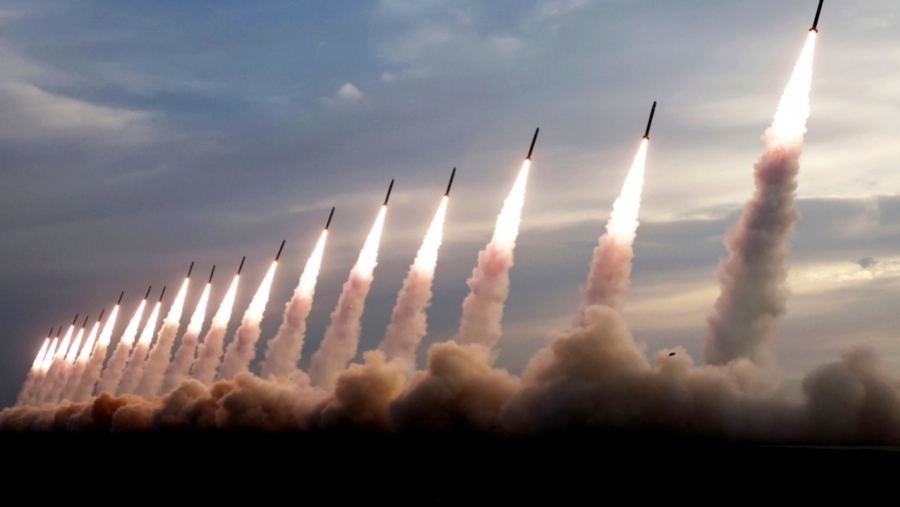
Iran has launched thousands of “suicide” drones (one-way attack drones) and hundreds of missiles against US military positions, embassies, and citizens
In a move that dramatically shifts the balance of power in the Middle East, Russia has reportedly gone “on the offensive” against the US. According to revealing data, Russia is providing Iran with specialized targeting intelligence, “unlocking” Tehran’s ability to locate and strike with precision American warships, aircraft, and strategic bases. This represents the first undeniable sign that one of the United States’ most powerful nuclear rivals is now actively participating—albeit “under the radar”—in a proxy war, turning the region into a field of direct Russian “revenge.”
Russian assistance to Iran
According to information from the Washington Post, since the start of the war on Saturday (2/28/2026), Russia has transmitted to Iran the locations of US targets, including warships and aircraft, according to three officials. “It appears to be a fairly comprehensive effort,” one official stated. It is noted that Russia has called for the termination of the war, which it characterized as an “unprovoked act of armed aggression.”
Iran’s attack in Kuwait
Six American soldiers were killed and several others wounded by an Iranian drone attack on Sunday (3/1/2026) in Kuwait. Iran has launched thousands of “suicide” drones (one-way attack drones) and hundreds of missiles against US military positions, embassies, and citizens, even as the joint US-Israeli campaign has hit more than 2,000 Iranian targets—including ballistic missile sites, naval forces, and the country’s leadership.
“The Iranian regime is being completely crushed,” stated White House spokesperson Anna Kelly, without commenting on Russian aid to Iran. “Ballistic missile retaliation is decreasing every day, their navy is being eliminated, their productive capacity destroyed, and their proxies are barely putting up resistance.”
Analysts pointed out that the information sharing fits the pattern of Iranian strikes against US forces, including command and control infrastructure, radars, and temporary structures like the one in Kuwait. The CIA station at the US embassy in Riyadh, the capital of Saudi Arabia, has also been hit in recent days.
Precision strikes
Iran is “carrying out very precise strikes on early warning radars or over-the-horizon radars,” said Dara Massicot, an expert on the Russian military at the Carnegie Endowment for International Peace. “They are doing it in a very targeted way. They are targeting command and control,” she added.
Iran possesses only a handful of military-grade satellites and no satellite constellation of its own, making the images provided by Russia’s much more advanced space capabilities extremely valuable—especially as the Kremlin has perfected its targeting after years of war in Ukraine, Massicot noted.
Nicole Grajewski, who studies Iran’s cooperation with Russia at the Belfer Center of Harvard’s Kennedy School, stated there has been a high level of “sophistication” in Iranian retaliation, both in terms of Tehran’s targets and its ability in some cases to overwhelm US and allied defenses.
“They are penetrating anti-aircraft defenses,” she said, noting that the quality of Iran’s strikes appears to have improved even compared to its 12-day war with Israel last summer. The Pentagon is rapidly exhausting its stockpiles of precision weapons and anti-aircraft interceptors, sources familiar with the matter told the Washington Post, underlining concerns expressed by General Dan Caine, Chairman of the Joint Chiefs of Staff, as US President Donald Trump weighed whether to approve the operation. The administration has tried to downplay Caine’s assessment.
The war in Ukraine
Iran has been one of Russia’s primary supporters during the war in Ukraine, sharing technology for the production of cheap “suicide” drones that have been used repeatedly to overwhelm Kyiv’s anti-aircraft defenses and exhaust interceptor stockpiles donated by Western countries to protect Ukrainian cities.
“The Russians are very well aware of the help we provide to the Ukrainians,” said one of the US officials familiar with Moscow’s support for Tehran. “I believe they were very happy to try and get some revenge.” The quality of Russia’s intelligence collection is not on the same level as America’s, but it still ranks among the best in the world, the same official continued.
www.bankingnews.gr
Οι απόψεις που εκφράζονται στα σχόλια των άρθρων δεν απηχούν κατ’ ανάγκη τις απόψεις της ιστοσελίδας μας, το οποίο ως εκ τούτου δεν φέρει καμία ευθύνη. Για τα άρθρα που αναδημοσιεύονται εδώ με πηγή, ουδεμία ευθύνη εκ του νόμου φέρουμε καθώς απηχούν αποκλειστικά τις απόψεις των συντακτών τους και δεν δεσμεύουν καθ’ οιονδήποτε τρόπο την ιστοσελίδα.
Σχετικά άρθρα:
 Ξεκίνησε – Φουλ επίθεση στο Dnipropetrovsk, διέλυσαν Patriot – Το ΝΑΤΟ τα μαζεύει – Trump: Ήρθε η ώρα η Ρωσία να το τελειώσει
 Ray McGovern (CIA): Ήδη οι Ρώσοι νίκησαν, προελαύνουν με απίστευτο ρυθμό
 Rebound στις αγορές της Ασίας με οδηγό την AI – Ο Nikkei στο +1,5%, o Kospi στο +3%
Δισεκατομμυριούχος έχει επενδύσει το ένα τέταρτο της περιουσίας του σε χρυσό – To συστήνει σε… όλους
Rebound στις αγορές της Ασίας με οδηγό την AI – Ο Nikkei στο +1,5%, o Kospi στο +3%
Δισεκατομμυριούχος έχει επενδύσει το ένα τέταρτο της περιουσίας του σε χρυσό – To συστήνει σε… όλους